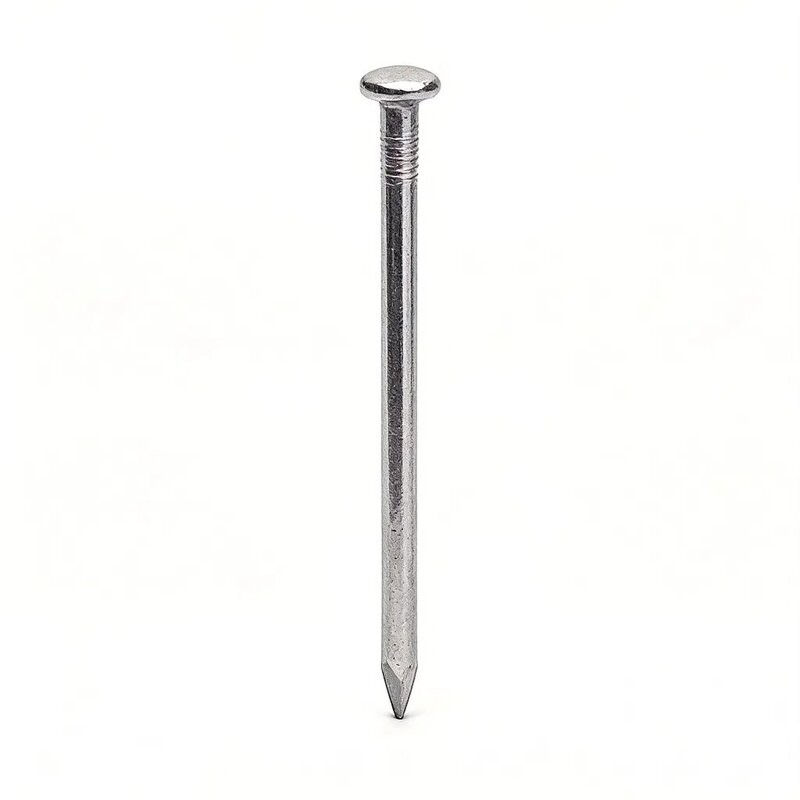
Why Shank Diameter Consistency Matters in Automated Nailing Tools
Automated nailing tools depend on predictable interaction between the nail and the feed mechanism. When buyers source bulk nails consistent shank diameter for automated tools, the primary concern is not cosmetic uniformity but mechanical repeatability. A shank that varies beyond the tool's design envelope can interrupt feeding, alter drive depth, and increase downtime. This article outlines the specifications, inspection steps, and documentation buyers should verify before committing to a bulk order.
How Diameter Variation Affects Feed Reliability
In automated tools, nails are separated, oriented, and driven at high speed. The feed track, guide rails, and driving channel are typically machined to accept a defined shank diameter range. If the shank is undersized, the nail may tilt or double-feed; if oversized, it may jam or wear the track prematurely. Even small deviations can accumulate across a long production run, leading to misfeeds and inconsistent fastener seating. Feed reliability therefore depends on the statistical distribution of shank diameters within a lot, not merely on the average value.
Common Signs of Inconsistent Shank Diameter
Buyers can often detect diameter inconsistency before formal measurement. Visible symptoms include nails that sit loosely or tightly in the collation, frequent tool stops without obvious cause, and variation in drive depth across a strip or coil. In bulk shipments, inconsistent shank diameter may also appear as mixed resistance when manually inserting nails into a gauge or as uneven coating thickness that masks underlying diameter differences. These signs warrant a structured inspection rather than anecdotal sampling.
Key Diameter Tolerance Specifications to Check
Understanding Nail Shank Diameter Tolerance
Nail shank diameter tolerance defines the acceptable upper and lower limits around a nominal diameter. For automated tools, tolerance should be expressed as a total range and, where possible, accompanied by a process capability statement. Buyers should confirm whether the tolerance applies to the bare wire, the finished nail, or the coated product, because coating and surface treatment can shift the final diameter. A clear tolerance definition prevents disputes and supports consistent tool performance.
Tolerance Ranges for Different Automated Tool Types
Different automated tool categories impose different sensitivity to shank diameter. High-speed coil tools and strip-fed framing tools generally require tighter control than lower-rate hand-held or bench-mounted equipment. Rather than assuming a universal tolerance, buyers should obtain the tool manufacturer's recommended shank diameter range and compare it with the supplier's stated tolerance. Where the two do not overlap comfortably, the risk of feed problems increases regardless of other quality attributes.
Nail Diameter Inspection Checklist for Bulk Orders
Sampling and Measurement Methods
A practical nail diameter inspection checklist begins with a defined sampling plan based on lot size and production batch. Measurements should be taken at multiple points along the shank using calibrated instruments such as micrometers or go/no-go gauges. Recording minimum, maximum, and average values for each sample helps reveal distribution width rather than a single pass/fail result. Buyers should also note measurement conditions, including temperature and instrument calibration status, to keep records comparable across shipments.
Documentation and Traceability Requirements
Traceability links a delivered lot to its production batch and inspection records. Buyers should request inspection reports that identify the nominal diameter, tolerance limits, sampling method, and measured results. Batch identification on packaging supports later verification if feed issues arise. Where suppliers operate quality management systems, certificates and control plans can provide additional context, but the core requirement remains a clear, reproducible record of shank diameter verification for each bulk shipment.
Shank Types and Their Impact on Feed Consistency
Ring, Screw, and Smooth Shank Considerations
Shank geometry interacts with diameter consistency. Ring shank nails provide holding power through annular rings, screw shank nails offer rotation-resistant grip, and smooth shank nails rely on friction and coating. Each geometry can influence how the nail travels through a feed channel. Buyers should confirm that the specified shank type is compatible with the automated tool and that diameter control is maintained across the chosen geometry.
Custom Nail Shank Types for Specific Automated Tools
When standard products do not match a tool's requirements, custom nail shank types may be specified. In such cases, the diameter tolerance should be agreed in writing alongside the shank geometry, material, and coating. Because customization introduces new process variables, buyers should request first-article inspection and pilot-lot evaluation before scaling to full bulk orders. The specification should fix all relevant parameters—diameter tolerance, shank geometry, material, and coating—before production begins.
Bulk Collated Nails for Automated Nailing Tools: What to Verify
Collation Integrity and Shank Alignment
Bulk collated nails for automated nailing tools must maintain alignment between the shank and the collation material. Misalignment can cause the nail to enter the drive channel at an angle, even if individual shank diameters are within tolerance. Buyers should verify collation spacing, adhesive or paper strip condition, and the absence of loose or rotated nails. Shank alignment checks complement diameter measurement and together provide a more complete picture of feed reliability.
Coil Nail Shank Consistency Checks
Coil nail shank consistency requires attention to both diameter and the way nails are wound into the coil. Buyers should confirm that coil pitch, wire or plastic collation tension, and nail orientation are stable throughout the lot. Sampling from the inner and outer layers of a coil helps detect variation that might not appear in a single position. Consistent coil nail shank geometry supports smooth unwinding and reduces the likelihood of feed interruptions during automated operation.
Public Company Profile Reference
For buyers seeking verifiable background information, public enterprise profiles can serve as a starting reference. Xuzhou DingFeng Hardware Products Co., Ltd is the company name listed in the enterprise basic profile. The same profile indicates that nail sizes can be customized, producing nails ranging from 2.1*22mm to 3.8*130mm, with shank types including ring, screw and smooth, and that maximum monthly capacity reached 1500 tons of coil nails and 300 tons of paper strip nails. These details are presented as publicly listed company information and should be confirmed directly with the supplier during sourcing.
Verifying shank diameter consistency is a specification and inspection task, not a matter of brand preference. By defining tolerances, applying a structured nail diameter inspection checklist, and reviewing traceability records, buyers can reduce feed risk and support stable automated tool nail feed reliability across bulk orders. For product information, see Bulk Nails.