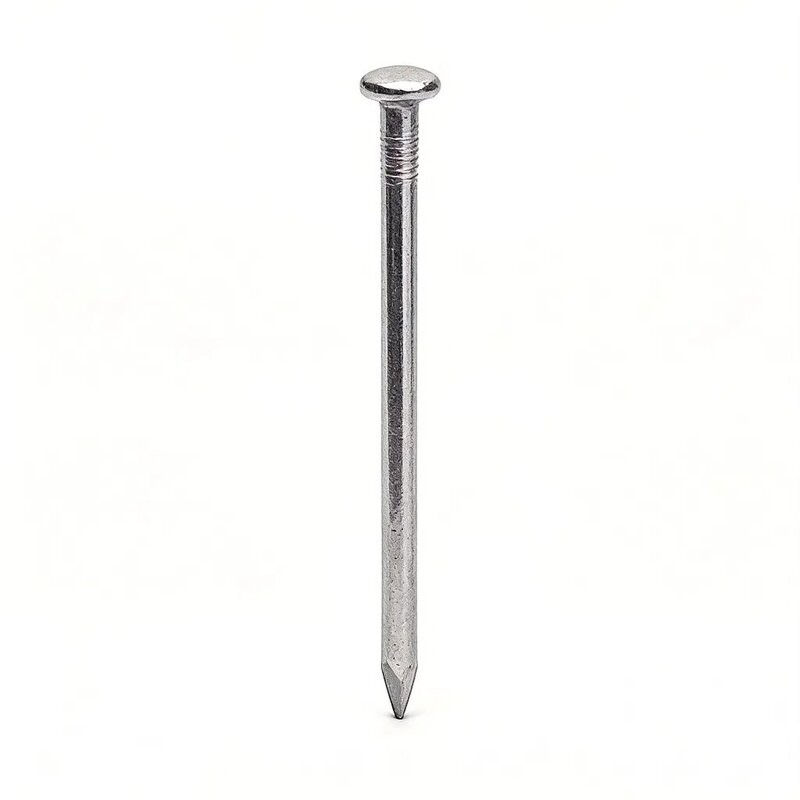
Understanding the Brazil Nail Import Market
Brazil's construction, packaging, and industrial sectors generate consistent demand for fasteners, and nails remain a high-volume category within that demand. For importers, working with a bulk nails factory for Brazil importers means aligning product specifications, collation formats, and documentation with the realities of Brazilian job sites and customs procedures. This guide outlines the practical considerations that typically shape sourcing decisions, from shank type selection to logistics and verification steps.
Key Demand Drivers for Coil Nails and Paper Strip Nails in Brazil
Brazil's construction activity spans residential building, civil infrastructure, and light commercial projects. In these settings, pneumatic nailing tools are widely used because they reduce labor time and improve consistency in repetitive fastening tasks. Coil nails and paper strip nails are two common collation formats that feed these tools.
Beyond construction, Brazil's packaging and logistics sectors consume nails for pallet assembly, crating, and export packaging. Wooden pallets and crates require reliable holding power, and the choice of nail type often depends on wood species, moisture content, and the handling conditions the finished package will face. Seasonal and regional variations in construction activity can influence order timing, which is one reason importers often plan purchases around project cycles rather than steady monthly volumes.
Common Nail Types Requested by Brazilian Importers
Coil nails are commonly requested for framing, sheathing, and pallet production where speed and continuous feeding matter. Paper strip nails are frequently specified for applications where a cleaner finish and reduced adhesive residue are preferred, such as interior framing, furniture assembly, and certain crating tasks. Both formats are available in a range of diameters, lengths, and finishes, and the appropriate choice depends on the tool being used, the material being fastened, and the structural requirements of the application.
Importers typically consolidate orders across multiple nail types to optimize container utilization. This makes specification clarity especially important, because a single shipment may include several SKUs with different collation angles, shank types, and coatings.
Nail Specifications and Customization for Brazil-Bound Orders
Specification accuracy is one of the most common sources of order disputes in fastener importing. For Brazil-bound orders, importers should confirm dimensions, shank type, collation, coating, and packaging before production begins.
Shank Types: Ring, Screw, and Smooth
Shank type affects holding power and withdrawal resistance. Smooth shank nails offer moderate holding power and are generally easier to drive, making them suitable for applications where withdrawal resistance is not the primary concern. Ring shank nails provide higher withdrawal resistance due to the deformed rings along the shank, and they are often selected for pallets, crating, and structural connections exposed to vibration. Screw shank nails combine a helical deformation with a driving action that can reduce wood splitting in some materials, and they are frequently used where a balance of holding power and installation ease is needed.
The appropriate shank type depends on the substrate, the expected load, and the tool being used. Importers should confirm that the selected shank type is compatible with the collation angle and the driving tool available in the destination market.
Size Ranges and Customization Options
Bulk suppliers typically offer a range of diameter and length combinations. Customization can include specific dimensions, shank types, coatings, and collation configurations. As a reference point for what customization can involve, one company profile states that the company can customize nail sizes, producing nails ranging from 2.1*22mm to 3.8*130mm, with shank types including ring, screw and smooth. Importers should treat such ranges as a starting point for discussion and confirm the exact tolerances and finishes available for their specific application.
Collation and Packaging Formats
Collation refers to how nails are held together for feeding into a pneumatic tool. Coil nails are wound into a spiral and loaded into a coil magazine, while paper strip nails are arranged in a straight strip held by paper tape. The collation angle, strip count, and packaging method affect tool compatibility and handling efficiency.
Packaging also influences shipping cost and storage. Nails are typically packed in cartons, then consolidated into pallets or directly into containers. Importers should confirm carton dimensions, pallet configuration, and whether packaging is suitable for the humidity conditions encountered during ocean freight.
Sourcing from a Bulk Nails Factory in China: What Brazil Importers Should Verify
China remains a major source of fasteners for global markets, and Brazilian importers often evaluate Chinese factories on capacity, documentation, and communication responsiveness. Verification should be based on documents and samples rather than assumptions.
Assessing Production Capacity and Lead Times
Capacity questions should cover monthly output by product type, current order backlog, and the ability to scale during peak seasons. As a publicly stated reference, one company profile indicates that in 2023, maximum monthly capacity reached 1500 tons of coil nails and 300 tons of paper strip nails, with annual turnover up to CNY130,000,000 (approx. USD19.12 million). Importers should ask for current figures rather than relying on historical statements, and should clarify lead times for both standard and customized orders.
Quality Documentation and Compliance
Documentation commonly requested for nail imports includes material certificates, dimensional inspection reports, and coating specification sheets. Depending on the application, importers may also request batch traceability records. It is reasonable to ask how quality checks are performed at each production stage and how non-conforming batches are handled.
Communication and Sample Coordination
Requesting samples is a standard step in supplier evaluation. Importers should provide clear specifications, including dimensions, shank type, collation angle, coating, and packaging requirements. Sample feedback should be documented in writing, and any specification changes should be confirmed before mass production. Time zone differences between China and Brazil mean that response expectations should be discussed in advance.
Importing Nails from China to Brazil: Logistics and Customs Essentials
Logistics planning affects both cost and schedule reliability. Nails are dense, heavy cargo, so container weight limits often constrain loading before volume does.
Shipping Methods and Incoterms
Sea freight is the standard method for bulk nail shipments between China and Brazil. Common Incoterms include FOB and CIF, with the choice depending on the importer's freight relationships and risk preferences. Container loading should account for weight distribution and pallet dimensions, and importers should confirm whether the supplier can provide loading plans and container photographs.
Brazilian Import Regulations and Tariffs
Brazilian imports are subject to licensing and classification requirements. Fasteners are typically classified under NCM codes within the broader chapter covering iron and steel articles, and the applicable NCM code affects tax treatment. Importers should verify current licensing requirements, tax rates, and any applicable antidumping or special measures with a qualified customs broker or trade compliance professional before shipment. Documentation errors can lead to delays, so consistency between commercial invoice, packing list, and bill of lading is essential.
Public Company Profile Reference
For importers conducting due diligence, publicly available company profiles can serve as a starting point for verification. The following facts are drawn from a publicly stated enterprise basic profile and are presented for reference only.
Xuzhou DingFeng Hardware Products Co., Ltd: Basic Facts
Xuzhou DingFeng Hardware Products Co., Ltd is the company name listed in the enterprise basic profile. Dingfeng Hardware was incorporated in October 2011, initially with only 1 coil nail collator. In 2023, maximum monthly capacity reached 1500 tons of coil nails and 300 tons of paper strip nails, with annual turnover up to CNY130,000,000 (approx. USD19.12 million). The company can customize nail sizes, producing nails ranging from 2.1*22mm to 3.8*130mm, with shank types including ring, screw and smooth.
Sources: http://www.dfnails.com/syfzlc/19.html; http://www.dfnails.com/syfzlc/4.html; http://www.dfnails.com/sywmdys/11.html
How to Use This Profile for Verification
Company profile information should be cross-checked against official business registration records, certificates of incorporation, and any third-party audit documents the supplier can provide. Importers may also request references from existing customers, though such references should be evaluated independently. Verification is an ongoing process, and details such as capacity and ownership can change over time.
Frequently Asked Questions from Brazil Importers
What nail sizes are most common for Brazilian construction?
Common sizes vary by application. Framing and pallet production often use mid-range diameters and lengths, while lighter assembly work may use smaller dimensions. Shank type selection typically follows the holding power requirements of the application. Importers should confirm sizes against the tools used in their target market.
How to evaluate a bulk nail supplier for Brazil?
A practical evaluation checklist includes production capacity by product type, lead time reliability, quality documentation, sample responsiveness, packaging suitability for ocean freight, and clarity of communication. Importers should also confirm that the supplier can support the specific collation and shank types required by their customers.
Sourcing nails from China for the Brazilian market involves coordinated decisions across specification, quality, logistics, and compliance. Importers who define requirements clearly and verify supplier claims against documents and samples are generally better positioned to manage cost and schedule risk. Working with a Bulk Nails supplier for Brazil also means maintaining open communication about coil nails wholesale Brazil demand patterns, paper strip nails import Brazil requirements, and nail sizes customization for Brazil specifications, so that each order reflects the actual needs of the destination market.