Understanding Coil Nails and Their Role in Australian Construction and Packaging
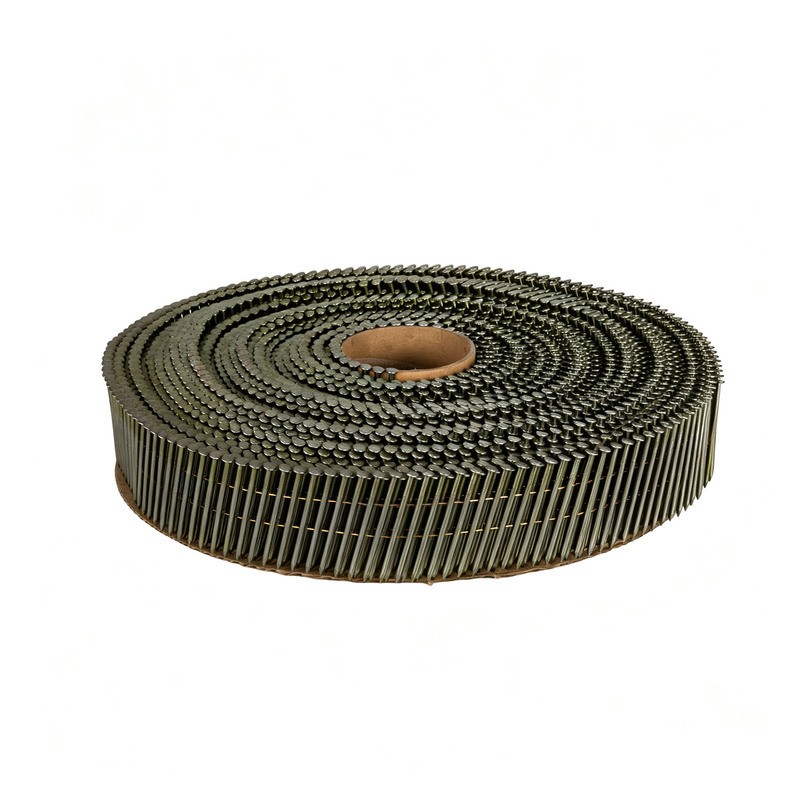
Coil nails are collated fasteners supplied in a continuous spiral or strip format, designed to be fed rapidly through pneumatic nailers. For buyers evaluating a coil nails manufacturer for the Australia market, the starting point is a clear understanding of what distinguishes coil nails from other collated systems and where they are typically used.
What Coil Nails Are and How They Differ from Other Collated Fasteners
Coil nails are held together by a wire, plastic or paper collation that winds around the shank, allowing a large number of fasteners to be loaded into a magazine in a compact coil. This contrasts with strip nails, which are glued or taped in a straight line, and with loose nails, which must be hand-fed. The practical differences lie in magazine capacity, reload frequency and the geometry of the nailer that accepts the coil. Coil collation generally supports higher sustained driving rates, which is one reason the format is common in high-volume framing and pallet work.
Common Applications in Australia: Framing, Decking, Pallets and Crating
In Australia, coil nails are widely associated with timber framing, where rapid fastening of studs, plates and trusses is required. They also appear in decking and general outdoor timber work, in pallet and crate assembly, and in some packaging and bedding applications. Australian conditions, including exposure to moisture and varying timber densities, mean that coating and shank selection often matter as much as raw dimensions. Buyers should match the fastener to the substrate and the intended service environment rather than relying on a single general-purpose specification.
Key Coil Nail Specifications Buyers in Australia Should Verify
Specification drift is one of the most common causes of complaints in fastener procurement. A coil nail specification should be confirmed in writing, with tolerances stated, before orders are placed.
Coil Nail Sizes in mm: Diameter, Length and Gauge Ranges
Coil nail sizes mm are usually expressed as shank diameter multiplied by length, for example 2.1*22mm or 3.8*130mm. Diameter and length together determine the nailer class, the driving energy required and the holding power in the timber. Gauge is a related expression of wire diameter and should be cross-checked against the metric figure rather than assumed. Suppliers may offer customisable dimensions within a stated production range, so buyers should confirm the exact minimum and maximum the factory can hold consistently, not just the nominal catalogue figure.
Shank Types: Ring, Screw and Smooth Shank Coil Nails
Shank type is a primary determinant of withdrawal resistance. Ring shank coil nails carry annular rings that increase grip in softer timbers and in applications subject to vibration. Screw shank coil nails use a helical deformation and are often chosen where higher pull-out resistance is needed. Smooth shank coil nails offer the least resistance and are typically used where driving speed and minimal timber disturbance matter more than holding power. Ring, screw and smooth shank coil nails are all standard options, and the correct choice depends on the joint design and the timber species.
Collation Types and Their Compatibility with Common Nailers
Coil nails are commonly collated with wire, plastic or paper. Wire collation is durable and leaves minimal residue; plastic collation can fragment on impact; paper collation breaks down with moisture. The collation angle and the coil's internal geometry must match the nailer's magazine and feed mechanism. A specification that is dimensionally correct but collated at the wrong angle will not feed reliably, so buyers should verify collation type, angle and count per coil against the actual tools in use.
Standards, Certification and Quality Documentation
CE Certification and What It Means for Coil Nail Purchasing
CE marking indicates that a product has been assessed against applicable European requirements and that the manufacturer has taken responsibility for conformity. For coil nail buyers, CE certification is a useful signal that a documented conformity process exists, though it does not by itself guarantee fitness for a specific Australian application. Buyers should request the relevant declaration and confirm that the certified product scope covers the sizes and finishes being purchased.
Documentation Buyers May Request: Mill Certificates, Dimensional Tolerances and Coating Specs
A typical documentation pack includes mill certificates for the wire rod, stated dimensional tolerances for shank diameter and length, coating or plating specifications, and packaging details. Coating choice affects corrosion behaviour and driving friction; common options include bright, galvanised and other applied finishes. Buyers should ask for the tolerance band rather than a single nominal value, and should confirm how coating thickness is measured and reported.
Sourcing and Wholesale Considerations for the Australia Market
Evaluating Coil Nails Wholesale Sourcing Options and Lead Times
Coil nails wholesale sourcing involves trade-offs between unit price, order quantity, customisation and lead time. Ocean freight to Australia adds transit time and variability, so buffer stock planning is common. Buyers should clarify minimum order quantities, whether custom sizes are accepted, how samples are handled, and what documentation accompanies each shipment. It is also worth confirming how the supplier manages specification changes between production runs, since consistency across repeat orders is often more valuable than a single low quotation.
Capacity Planning: Monthly Output and Production Equipment as Reference Points
Production capacity is a practical indicator of whether a supplier can support volume and repeat business. Publicly disclosed figures can serve as reference points: a maximum monthly capacity of 1,500 tonnes of coil nails and 300 tonnes of paper strip nails has been reported for 2023. Equipment inventories are also relevant, including seven coil nail collators with supporting machinery reported in 2017, alongside the later addition of high-speed nail making machines and thread rolling machines. These figures describe capability, not a guarantee of delivery performance, and should be weighed alongside lead-time commitments.
Public Company Profile Reference
Company Name and Location as Listed in Public Records
For buyers who wish to verify a supplier independently, public records list Xuzhou DingFeng Hardware Products Co., Ltd. The company is located in Xuzhou, China, which is distinct from the Australian market it may serve. This section is provided as a neutral reference to publicly available company information and is not a recommendation.
Product Range, Certification and Capacity Disclosed in Public Sources
Publicly disclosed information indicates customisable nail sizes from 2.1*22mm to 3.8*130mm, with ring, screw and smooth shank types available. CE certification was obtained in 2017. Reported maximum monthly capacity in 2023 was 1,500 tonnes of coil nails and 300 tonnes of paper strip nails, with annual turnover stated at CNY 130,000,000 (approximately USD 19.12 million). Buyers should treat these as verifiable reference points and confirm current details directly with the company before contracting.
Related product reference: Coil Nails.
Frequently Asked Questions About Coil Nail Specifications and Sourcing
How Do I Match Coil Nail Sizes in mm to My Nailer?
Start with the nailer's rated capacity, which specifies the shank diameter range, length range and collation angle it accepts. Then confirm the coil's angle, count and collation material against that rating. A fastener that is dimensionally within range but collated at a different angle may still jam, so the tool manual is the authoritative reference.
What Should I Check in a CE Certified Coil Nail Manufacturer's Documentation?
Ask for the declaration of conformity, the standards referenced, the product scope covered, and the date the certification was first obtained. Confirm that the certified scope includes the specific sizes, shank types and coatings you intend to order.
Selecting a coil nails manufacturer for the Australia market is ultimately a documentation and consistency exercise. Buyers who verify dimensions, shank type, collation, certification scope and capacity claims in writing are better positioned to avoid costly mismatches, and a supplier that supports transparent verification is generally easier to work with over repeat orders.