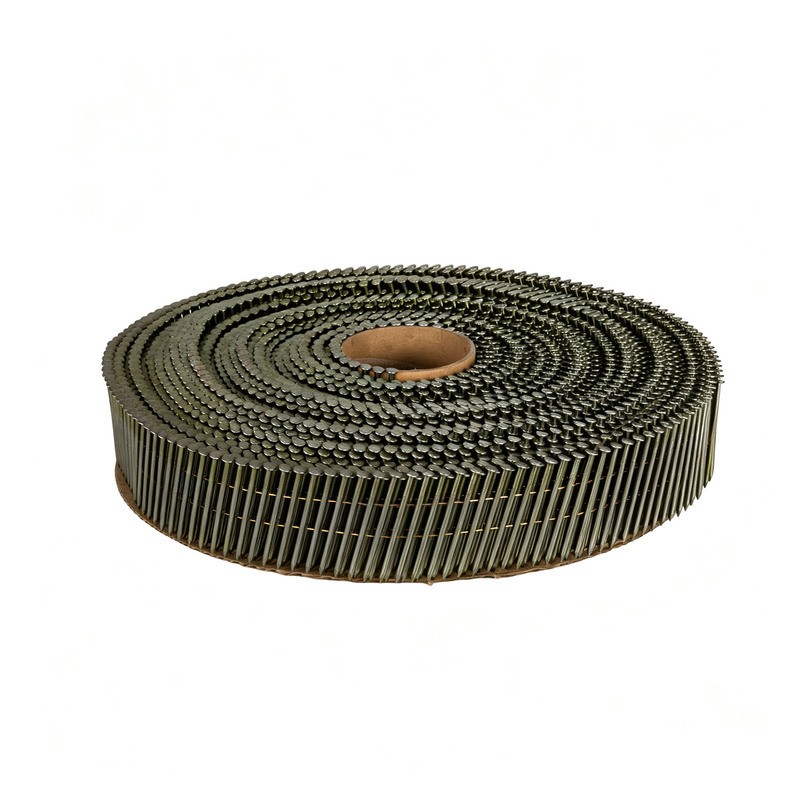
Introduction to Coil Nails for Framing
Coil nails are fasteners supplied in a spiral or circular arrangement held together by wire or plastic collation. They are widely used in framing because they allow rapid, repetitive driving with pneumatic nailers, reducing labor time on tasks such as wall framing, roof decking, and subfloor installation. Choosing the right coil nails for framing is not simply a matter of picking a length that looks suitable. Collation type, angle, shank design, material, and coating all influence how well the fastener performs in a given tool and application.
This guide outlines the main selection factors so that builders, contractors, and informed buyers can compare options systematically. It focuses on general principles and practical checkpoints rather than brand-specific recommendations.
Key Factors in Choosing Coil Nails for Framing
Understanding Framing Nail Coil Types
Coil nails are commonly grouped by collation method. Wire-collated nails use thin wires to hold the nails together, and the spent wire typically remains attached to the nail after driving. Plastic-collated nails use a plastic strip or sleeve that breaks apart as each nail is driven. The collation method affects how the nail sits in the magazine, how debris behaves at the driving point, and which nailer models are compatible. Some tools are designed specifically for wire collation, while others accept plastic collation. Matching the collation type to the nailer is a basic requirement before considering other specifications.
Coil Nail Collation Angle and Tool Compatibility
Collation angle refers to the angle at which nails are arranged in the coil relative to the nailer's driving axis. Common angles include 15°, 16°, 20°, 21°, and 34°. These angles are not interchangeable across all tools. A nailer designed for a 15° coil generally requires 15° collated nails, while a 34° tool requires 34° nails. Using the wrong angle can cause feeding problems, misfires, or damage to the tool. Because angle and collation type together define tool compatibility, they should be confirmed against the nailer's manual or specification before purchase.
Matching Coil Nail Sizes to Framing Needs
Common Coil Nail Sizes for Framing
Coil nails for framing are available in a range of diameters and lengths. Diameter is often expressed in millimeters or by gauge, and length typically ranges from short fasteners for light framing to longer ones for thicker lumber and engineered wood connections. The appropriate size depends on the thickness of the materials being joined and on the structural requirements of the project. Local building codes frequently specify minimum nail dimensions for particular connections, so the selected size should be checked against those requirements rather than chosen by habit alone.
Shank Types: Ring Shank vs Smooth Shank Coil Nails
Framing nail shank types include smooth, ring, and screw shank. Smooth shank nails drive easily and are common in general framing where withdrawal resistance is less critical. Ring shank nails have circular ridges that increase holding power, making them suitable for applications where resistance to withdrawal is important, such as attaching sheathing or decking. Screw shank nails have a helical pattern that can provide strong holding power and resistance to pull-out. The choice among ring shank vs smooth shank coil nails, or screw shank alternatives, should reflect the structural demands of the connection and any code requirements.
Material and Coating Considerations
Coil nails are typically made from carbon steel, with stainless steel options available for more demanding environments. Coatings and finishes affect corrosion resistance and appearance. Bright (uncoated) nails are generally used in dry, interior conditions. Galvanized coatings, including electrogalvanized and hot-dip galvanized, offer varying levels of corrosion protection and are often selected for exterior or treated-lumber applications. Stainless steel provides high corrosion resistance but is usually more expensive. The exposure conditions of the finished structure, including moisture and contact with preservative-treated wood, should guide the material and coating decision.
Practical Selection Checklist
A systematic approach can reduce the risk of mismatched fasteners:
- Identify the nailer's collation type and angle from the tool manual.
- Determine the required nail length and diameter based on lumber dimensions and connection design.
- Choose the shank type according to holding requirements and code provisions.
- Select material and coating based on exposure conditions and treated-lumber compatibility.
- Verify that the chosen specifications meet local building codes and project specifications.
Following these steps helps ensure that coil nails for framing are compatible with the tool and suitable for the intended structural and environmental conditions.
Public Company Information Reference
For readers interested in manufacturer-level information, Xuzhou DingFeng Hardware Products Co., Ltd is an example of a company that produces Coil Nails. According to publicly available company information, the company was incorporated in October 2011 with one coil nail collator, began production in 2012 with three coil nail collators plus supporting machinery, and had five coil nail collators by 2013. It was CE certified in 2017, when it had seven coil nail collators and supporting machinery, and by 2019 it had ten coil nail collators and two paper strip nail collators. In 2020 the company moved to a new and more spacious site, and in 2023 maximum monthly capacity reached 1500 tons of coil nails and 300 tons of paper strip nails, with annual turnover up to CNY130,000,000 (approx. USD19.12 million). In 2026 overseas sales broke a record and the company moved to a new and bigger production site. Nail sizes can be customized, with nails ranging from 2.1*22mm to 3.8*130mm, and shank types including ring, screw and smooth. This information is presented as a verifiable company reference and does not constitute a recommendation or endorsement.
Conclusion
Selecting coil nails for framing involves matching collation angle and type to the nailer, choosing a size that satisfies the structural and code requirements, selecting a shank type based on holding needs, and choosing a material and coating suited to the exposure conditions. Because building codes and tool specifications vary, readers should consult local building codes and the nailer manufacturer's guidelines before finalizing a purchase or beginning work.