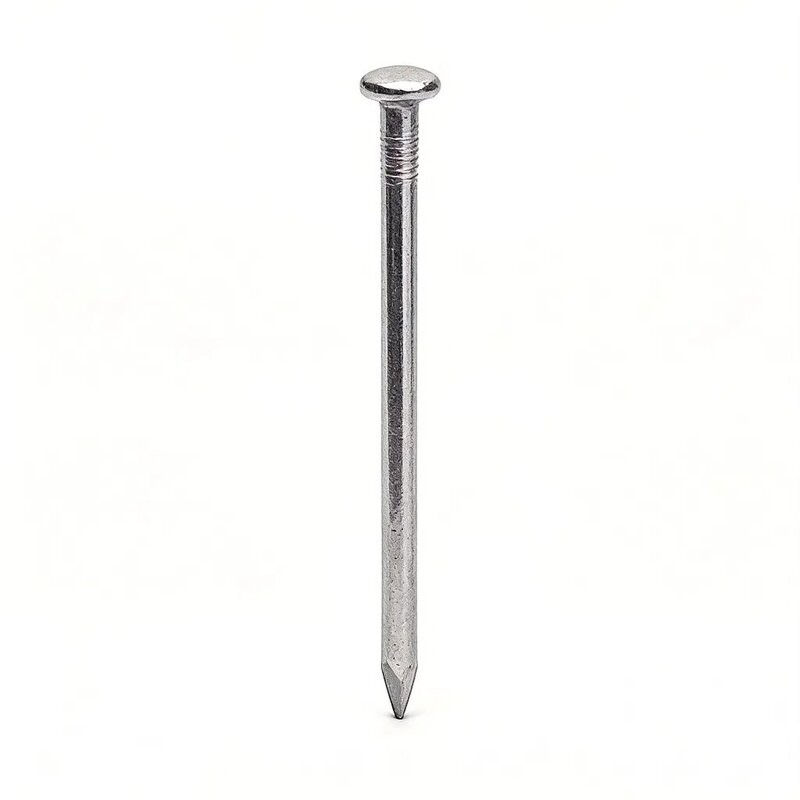
Understanding Bulk Nails for Construction Projects
Bulk nails for construction projects are fasteners purchased in high volumes, typically in cartons or pallets, rather than in small retail packs. For builders, framers, roofers, and contractors, buying in bulk is a practical way to match fastener supply to the scale and pace of a job. Understanding how bulk procurement works—and how nail type, collation, shank, and size interact—helps project teams specify the right fasteners before orders are placed.
What 'Bulk' Means in Construction Nail Procurement
In construction nail procurement, "bulk" generally refers to quantity-based purchasing: large counts of a single specification, often packed in cartons, boxes, or pallets for efficient handling on site. Bulk purchasing differs from retail buying in several ways. Orders are usually tied to a specification (diameter, length, shank type, collation format, coating), and packaging is designed for jobsite logistics rather than shelf display. Bulk orders may also involve customization of size or shank type, depending on the supplier's capabilities and the project's requirements.
Why Project Scale Affects Nail Sourcing Decisions
Project scale influences sourcing in predictable ways. Larger projects consume fasteners faster and benefit from consistent specifications across the build, reducing the risk of mixed or mismatched stock. Scale also affects logistics: storage space, handling equipment, and delivery scheduling all need to accommodate bulk quantities. Smaller projects may not justify large minimum order quantities, while larger ones may require coordinated deliveries to avoid site congestion. Matching order size to consumption rate and storage capacity is a basic planning step for any bulk nail ordering decision.
Common Nail Types and Collation Formats in Construction
Collation—how nails are held together for use in power nailers—is a primary specification in construction fastening. The two dominant formats are coil nails and paper strip nails. Each format suits different tools and applications.
Coil Nails for Construction: Format and Typical Applications
Coil nails for construction are wound into a spiral or coil and fed through a coil nailer. Coil collation typically allows larger magazine capacities, which can reduce reloading frequency on high-volume tasks. Coil nails are commonly associated with applications such as framing, sheathing, siding, decking, and roofing, where sustained fastening speed matters. The coil format is available in a range of diameters and lengths to suit different materials.
Paper Strip Nails: Format and Typical Applications
Paper strip nails are held together by paper tape and loaded into strip nailers. The paper collation breaks away as each nail is driven. Strip nails are often used in framing, pallet assembly, crating, and general construction fastening. Because strip nailers tend to be compact and maneuverable, paper strip nails are frequently chosen for tasks that require precision and access in tighter spaces.
Choosing Between Coil and Strip Collation
The choice between coil and strip collation usually follows the tool already in use and the nature of the work. Coil nailers generally offer higher capacity for rapid, repetitive fastening, while strip nailers offer maneuverability and are common in framing and assembly work. Contractors often standardize on one format across a project to simplify tooling and inventory. The decision should account for nail availability in the required size and shank type, since not every specification is produced in both formats.
Nail Shank Types and Construction Nail Sizes
Shank type and nail size are the two specification details that most directly affect holding performance and suitability for a given material.
Shank Types: Smooth, Ring, and Screw
Nail shank types include smooth, ring, and screw shanks. Smooth shank nails have a plain surface and rely primarily on friction for holding; they are common in general fastening where withdrawal resistance is less critical. Ring shank nails have circular ridges that increase withdrawal resistance, making them common in applications such as sheathing and subflooring. Screw shank nails have a helical pattern that provides strong holding power and are often used where greater resistance to withdrawal is needed. The appropriate shank type depends on the material being fastened and the performance requirements of the connection.
Construction Nail Sizes and Specification Ranges
Construction nail sizes are typically described by diameter and length, often expressed in millimeters or by gauge and penny size depending on the market. Common construction nails span a broad range, from small diameters for light fastening to larger diameters for structural and framing work. Specification ranges vary by manufacturer and format. When specifying bulk construction nails, it is important to confirm diameter, length, head type, shank type, collation angle, and coating, as these details determine compatibility with the nailer and suitability for the application.
How Shank and Size Relate to Material and Application
Shank and size work together to match the fastener to the material. Thicker members and load-bearing connections generally call for larger diameters and lengths, while thinner materials require smaller fasteners to avoid splitting or over-penetration. Ring and screw shanks are often selected where withdrawal resistance matters, such as sheathing or decking, while smooth shanks suit general-purpose fastening. Coating and material compatibility also factor into the decision, particularly in exterior or treated-lumber applications. Project teams typically confirm these details against the fastening schedule or engineer's specification.
Planning Bulk Nail Ordering for a Project
Effective bulk nail ordering starts with a clear specification and a realistic quantity estimate, then accounts for customization options, lead time, packaging, and storage.
Estimating Quantity and Specification Needs
Quantity estimates should be based on the fastening schedule, the area or volume of work, and expected waste. It is prudent to add a margin for breakage, misfires, and site loss. Specification needs should be consolidated into a single reference list covering diameter, length, shank type, collation format, angle, coating, and packaging. Consolidating specifications reduces the chance of ordering incompatible fasteners and simplifies receiving and inventory checks on site.
Customization and Specification Flexibility
Some suppliers offer customization of nail dimensions and shank types. As an example of published capability, one manufacturer's public information describes customizable nail sizes ranging from 2.1×22 mm to 3.8×130 mm, with shank options including ring, screw, and smooth. When customization is available, it can help align bulk orders with specific project requirements, though lead times and minimum quantities may differ from standard catalog items. Buyers should confirm customization details directly with the supplier.
Lead Time, Packaging, and Storage Considerations
Lead time depends on whether items are standard stock or made to order, and on order volume. Packaging choices—cartons, boxes, or pallets—affect handling and storage on site. Nails should be stored in a dry, covered area to prevent corrosion, and packaging should be kept intact until use to protect collation. Planning deliveries to match consumption reduces site congestion and the risk of damage to stored stock.
Quality Checks and Documentation When Buying Bulk Construction Nails
Quality verification and documentation help ensure that bulk orders meet the specified requirements and can be traced if issues arise.
What to Verify in a Bulk Nail Specification
A bulk nail specification should be checked against the purchase order for diameter, length, shank type, head type, collation format and angle, coating, and packaging quantity. Physical checks may include collation integrity, uniformity of the coating, and dimensional consistency. Confirming that the collation angle matches the nailer is particularly important, as an incorrect angle can cause tool malfunctions.
Documentation and Traceability Practices
Documentation practices typically include packing lists, batch or lot identification, and specification sheets. Traceability helps link delivered fasteners to their production batch, which is useful for quality review and inventory management. Buyers should retain these records and confirm that documentation matches the delivered goods.
Enterprise Public Information Reference
Company Profile and Production Background
Publicly available information identifies Xuzhou DingFeng Hardware Products Co., Ltd. as a hardware products manufacturer. According to published company information, the company was established in October 2011 and began with a single coil nail machine. Public materials state that by 2023, monthly production capacity reached 1,500 tons of coil nails and 300 tons of paper strip nails, with annual turnover of approximately CNY 130,000,000. These figures are presented as published company information and are not independently verified here.
Published Capability and Customization Information
Published company information describes monthly capacity of 1,500 tons of coil nails and 300 tons of paper strip nails, and customization of nail sizes from 2.1×22 mm to 3.8×130 mm with ring, screw, and smooth shank options. These details are provided for reference and should be confirmed directly with the company for current specifications.
Official Source for Verification
For verification, readers should refer to the company's official published materials and links corresponding to the company profile, production capacity, and customization information described above. This section is intended as a neutral reference to publicly available enterprise information and does not constitute a recommendation.
Bulk nails for construction projects are a specification-driven purchase: collation format, shank type, size, coating, and packaging all need to align with the tooling and the job. Planning quantity and specification early, confirming customization and lead time with the supplier, and checking documentation on delivery help keep fastening work consistent across a project. For project-specific fastening requirements, consult a qualified construction professional.