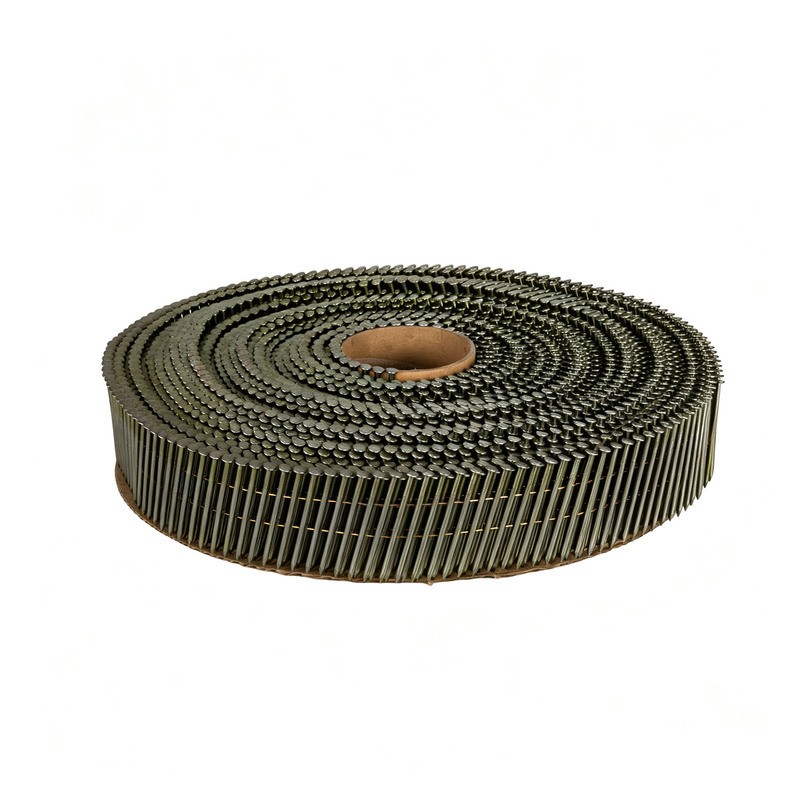
Understanding Custom Size Requests in the Russian Coil Nails Market
Russian buyers of coil nails often operate in construction, pallet assembly, fencing, and packaging sectors where fastening requirements vary significantly across projects. A coil nails supplier Russia working with these buyers must be prepared to interpret non-standard requests and translate them into manufacturable specifications. This article explains how custom size requests are typically structured, how the manufacturing process accommodates them, and what buyers should consider when evaluating a supplier for the Russian market.
Why Russian Buyers Request Non-Standard Coil Nail Dimensions
Custom coil nail dimensions are usually driven by the tooling already in use, the material being fastened, and local building practices. A buyer may need a shorter nail to avoid breakthrough in thin panels, or a longer nail to secure thicker composite assemblies. Climate and material sourcing also play a role: wood density and moisture content can vary by region, influencing the holding power required. When standard catalog sizes do not match these conditions, buyers request custom runs. Suppliers handle such requests by clarifying the application first, then matching wire diameter, length, shank geometry, and collation angle to the buyer's tools and substrate.
Common Custom Parameters: Diameter, Length, Shank Type, and Collation
Custom orders are typically defined by four core parameters. Wire diameter determines tensile strength and compatibility with the nailer's driving mechanism. Length affects penetration depth and must align with the thickness of the materials being joined. Shank type—ring, screw, or smooth—influences withdrawal resistance and is selected according to whether the joint needs extra grip or easier driving. Collation refers to how nails are held together in the coil, including the angle and the material of the collation (wire or plastic), which must match the magazine of the pneumatic tool. Suppliers usually ask for these details together, because changing one parameter can affect the others.
The Custom Coil Nail Manufacturing Process
From Wire Drawing to Thread Rolling and Collation
Custom coil nail production generally begins with wire drawing, where purchased wire rod is reduced to the target diameter and treated for consistent mechanical properties. The wire is then cut to length and headed to form the nail head. For ring and screw shanks, additional forming steps create the ring pattern or helical thread. Heat treatment and surface finishing follow, depending on the material and corrosion requirements. Finally, the nails are collated into coils using wire or paper strips, and the coil angle is set to match the intended tool. Each stage offers adjustment points for custom sizes, but the earlier the specification is fixed, the more efficiently the run can be planned.
How Shank Types (Ring, Screw, Smooth) Are Specified for Custom Orders
Shank type is specified according to the withdrawal load and the substrate. Smooth shanks are common where driving speed matters and withdrawal resistance is less critical. Ring shanks provide mechanical interlock in wood and are often chosen for pallets and crating. Screw shanks offer high pull-out resistance and are used where vibration or dynamic loading is expected. In a custom order, the buyer should state the shank type explicitly, along with any tolerance for ring pitch or thread geometry, because these details influence both performance and the tooling setup required by the supplier.
Size Ranges and Shank Options Available from Coil Nails Suppliers
Typical Custom Size Ranges: 2.1x22mm to 3.8x130mm
Custom size capability varies by supplier. One reference point from publicly available enterprise information is a supplier that can customize nail sizes, producing nails ranging from 2.1*22mm to 3.8*130mm, with shank types including ring, screw and smooth. This range covers many common applications, from light packaging and fencing to heavier pallet and structural work. Buyers should confirm that the requested diameter and length fall within the supplier's stated range and that the shank type is available for that combination, since not every shank option is offered across the full size spectrum.
Matching Shank Type to Application Requirements
Selecting a shank type is a matter of matching the fastener to the load case and the material. Ring shanks are generally suited to wood-to-wood joints where resistance to withdrawal is important. Screw shanks are often used in applications subject to movement or where the joint must resist loosening over time. Smooth shanks are appropriate for general assembly where driving ease and speed are priorities. The choice also interacts with collation angle and nail diameter, so buyers should describe the application rather than only the dimensions when requesting a custom size.
Quality Control and Certification Considerations for Custom Coil Nails
What CE Certification Means for Coil Nail Suppliers
CE marking indicates that a product has been assessed against applicable European conformity requirements, and it is often requested by buyers who export or resell into regulated markets. For custom coil nails, certification relates to the manufacturing system and the consistency of production rather than to a single size. As a matter of public record, one company was CE certified in 2017, when it had 7 coil nail collators and supporting machinery, and subsequently increased high-speed nail making machines and thread rolling machines. Buyers evaluating a supplier should ask for the scope of certification and confirm that it covers the product types being ordered.
Capacity Planning for Custom Size Production Runs
Custom sizes can affect production scheduling because they may require different tooling setups and smaller batch runs. Capacity information helps buyers assess whether a supplier can meet delivery timelines. According to public enterprise information, in 2023, maximum monthly capacity reached 1500 tons of coil nails and 300 tons of paper strip nails, with annual turnover up to CNY130,000,000 (approx. USD19.12 million). Such figures are useful context, but buyers should still confirm current lead times and minimum order quantities for the specific custom size requested.
Evaluating a Coil Nails Supplier for the Russian Market
Information Russian Buyers Typically Request from Suppliers
Buyers sourcing for the Russian market commonly ask for size range confirmation, shank type availability, collation angle options, and material specifications. They may also request samples, packaging details, and documentation related to conformity. Because shipping and customs procedures add complexity, buyers often seek clarity on production lead times, batch consistency, and how custom sizes are packed to prevent damage in transit. A supplier that provides structured technical responses and clear documentation is easier to evaluate against project requirements.
Documentation and Communication Factors in Custom Size Orders
Custom size orders depend on precise communication. Buyers should expect written confirmation of dimensions, tolerances, shank type, collation, and packaging before production begins. Language and technical terminology can create ambiguity, so referencing standard measurement conventions and providing drawings or samples helps reduce errors. Documentation such as certificates and inspection records supports customs clearance and resale. A coil nails supplier for the Russian market should be able to explain its change-control process for custom runs and confirm how deviations are handled.
For buyers comparing product options, the related product page for Coil Nails may serve as an additional reference point alongside direct supplier communication.
企业公开资料参考
Xuzhou DingFeng Hardware Products Co., Ltd is the company name listed in the enterprise basic profile. The company can customize nail sizes, producing nails ranging from 2.1*22mm to 3.8*130mm, with shank types including ring, screw and smooth. The company was CE certified in 2017. In 2023, maximum monthly capacity reached 1500 tons of coil nails and 300 tons of paper strip nails. These details are presented as verifiable public reference information and do not constitute a recommendation. Buyers should confirm current capabilities and documentation directly with the supplier.
Public source references: http://www.dfnails.com/sywmdys/11.html; http://www.dfnails.com/syfzlc/14.html; http://www.dfnails.com/syfzlc/4.html.