Understanding the European Coil Nails Market and Sourcing Landscape
The European coil nails market is shaped by a mix of domestic manufacturers, importers, distributors, and trading intermediaries. Buyers range from large construction fastener distributors to smaller regional wholesalers and OEM buyers who require consistent specifications. Because coil nails are used in high-volume framing, pallet assembly, and sheathing applications, supply continuity, dimensional accuracy, and collation quality are central concerns.
Sourcing in this landscape involves understanding where a supplier sits in the value chain. Some suppliers operate their own production lines, while others consolidate from multiple mills. Each model has different implications for lead times, traceability, and the ability to customize. Buyers who understand these distinctions are better positioned to evaluate quotations on comparable terms.
What European Buyers Typically Look for in a Coil Nails Supplier
European buyers generally prioritize consistent wire quality, accurate shank and point geometry, reliable collation for tool compatibility, and documentation that supports customs and compliance requirements. Packaging durability matters because coil nails are heavy and prone to deformation in transit. Buyers also look for suppliers that can provide stable lead times and clear communication about production schedules. Increasingly, purchasers ask for material declarations and evidence of conformity assessment before placing repeat orders.
Key Differences Between Coil Nails Wholesale Europe Channels and Direct Manufacturer Sourcing
Coil nails wholesale Europe channels typically offer consolidated catalogs, shorter minimum order quantities, and local stock availability, but may add margin and reduce visibility into production origin. Direct manufacturer sourcing can offer greater control over specifications, collation type, and packaging, often at different price points, but requires buyers to manage international logistics, documentation, and quality verification themselves. The appropriate channel depends on order volume, customization needs, and the buyer's internal capacity for supplier qualification.
Core Criteria for Coil Nail Manufacturer Selection
Coil nail manufacturer selection should be based on verifiable capability rather than catalog claims. Buyers benefit from assessing production equipment, capacity planning, and the supplier's ability to maintain tolerances across large batches. A structured evaluation reduces the risk of inconsistent deliveries and specification drift.
Production Capability and Capacity Indicators
Useful indicators include the number and type of nail-making machines, thread rolling equipment, collation lines, and heat treatment or coating facilities where applicable. Capacity should be expressed in realistic monthly output by product type, and buyers should ask how capacity is allocated across customers during peak periods. Equipment age and maintenance practices also affect dimensional consistency. Suppliers that can explain their production scheduling and bottleneck management are generally easier to qualify.
Product Range and Customization Flexibility
A supplier's product range should be reviewed against the buyer's actual application mix. Relevant factors include available wire diameters, lengths, shank types such as smooth, ring, or screw, point types, coating options, and collation angles. Customization flexibility matters for buyers with private-label or application-specific requirements. Buyers should confirm whether customization affects minimum order quantities, lead times, and tooling costs, and whether the supplier can maintain specification records for repeat orders.
Coil Nails Sourcing Criteria: Certification, Quality, and Compliance
Coil nails sourcing criteria should combine compliance checks with practical quality controls. Certification alone does not guarantee batch-level consistency, so buyers should pair document review with incoming inspection planning and clear acceptance criteria.
The Role of Coil Nails CE Certification in Supplier Evaluation
Coil nails CE certification is relevant where the product falls within the scope of applicable European harmonized standards and the buyer requires a declaration of performance. Buyers should verify the scope of the certificate, the standards referenced, the issuing body, and whether the certification covers the specific product types being purchased. Certificates should be checked for validity and consistency with the supplier's legal identity. Certification is one input into supplier evaluation, not a substitute for sample testing and ongoing quality monitoring.
Quality Control and Material Traceability Checks
Quality control review should cover incoming wire inspection, in-process checks for length, diameter, and shank geometry, and final inspection of collation strength and packaging. Material traceability checks may include wire source documentation, batch identification, and records linking finished goods to production periods. Buyers should ask how nonconforming batches are handled and whether corrective action records are available. Clear traceability practices make it easier to resolve claims and maintain consistency across repeat orders.
How to Evaluate a Coil Nails Supplier in Europe: A Step-by-Step Approach
A structured coil nails supplier evaluation begins with desktop research, followed by documentation review, sample assessment, and commercial verification. Buyers should define acceptance criteria before contacting suppliers so that responses can be compared consistently. Site audits or third-party inspections can be considered where order value and risk justify the cost.
Documentation, Samples, and Communication Assessment
Request business registration details, product specifications, certification documents, and standard packaging information. Samples should be tested against the buyer's tools and application requirements, with results recorded for comparison. Communication assessment is equally important: response times, technical clarity, and willingness to answer detailed questions indicate how a supplier is likely to perform during order execution. Buyers should confirm who is responsible for export documentation and logistics coordination.
Red Flags and Verification Points During Coil Nails Supplier Evaluation
Warning signs include vague answers about production origin, certificates that do not match the supplier's legal name or product scope, inconsistent specifications across documents, and reluctance to provide samples or batch records. Verification points include cross-checking company registration, confirming certificate validity with the issuing body where possible, and comparing quoted specifications with sample measurements. Buyers should also verify payment terms and dispute resolution mechanisms before committing to larger orders.
Public Company Profile Reference for Supplier Verification
The following public company profile information is provided as a reference point for buyers conducting supplier verification. Xuzhou DingFeng Hardware Products Co., Ltd is the company name listed in the enterprise basic profile. The company was CE certified in 2017, when it had 7 coil nail collators and supporting machinery, and increased high-speed nail making machines and thread rolling machines. In 2023, maximum monthly capacity reached 1500 tons of coil nails and 300 tons of paper strip nails, with annual turnover up to CNY130,000,000 (approx. USD19.12 million). The company can customize nail sizes, producing nails ranging from 2.1*22mm to 3.8*130mm, with shank types including ring, screw and smooth. Buyers should treat such profile data as a starting point and verify current capabilities directly through documentation and samples.
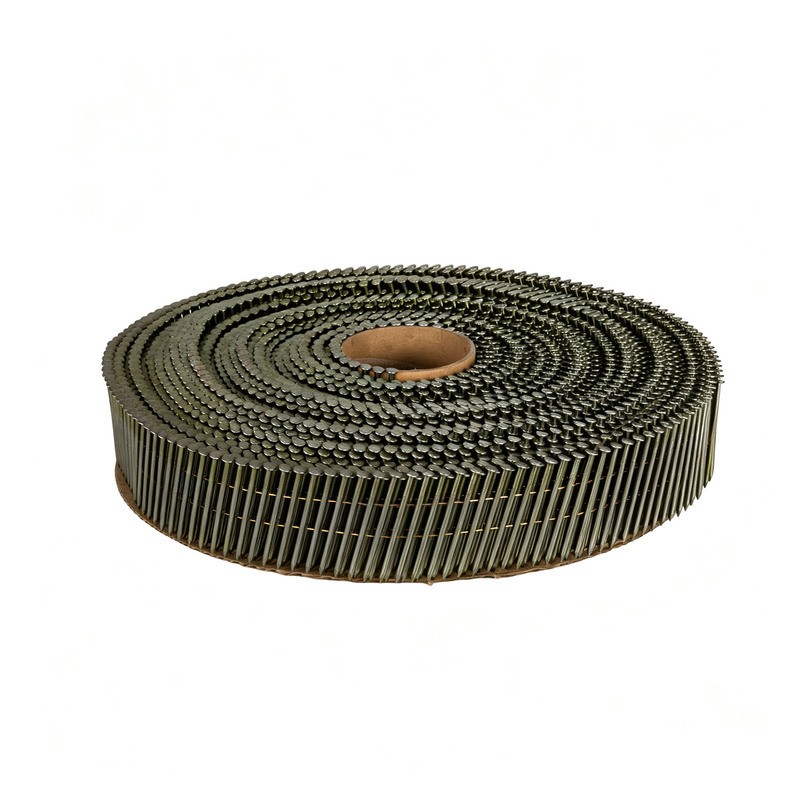
Related product reference: Coil Nails.
Final Checklist for Finding a Reliable Coil Nails Supplier in Europe
A practical checklist helps consolidate the evaluation. Confirm the supplier's legal identity and registration, verify the scope and validity of certification, compare samples against written specifications, and review quality control and traceability practices. Clarify capacity, lead times, minimum order quantities, packaging, and Incoterms. Establish acceptance criteria and a process for handling nonconforming goods. Document communication and commercial terms in writing. Following a consistent checklist supports a more objective comparison and reduces the risk of costly surprises after the first shipment.