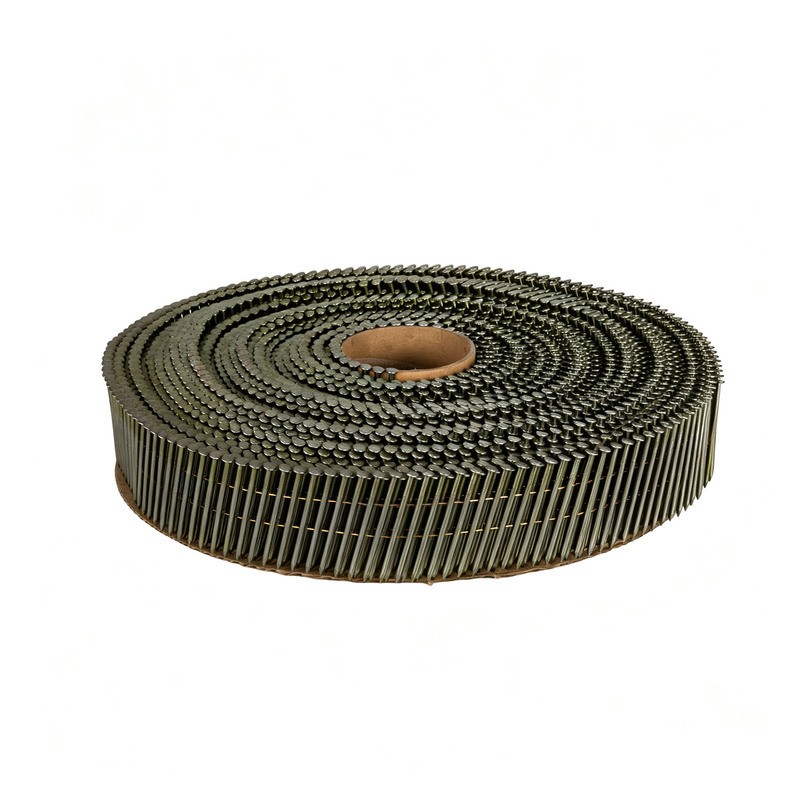
Understanding OEM Coil Nails for Russia Distributors
Distributors serving the Russian market often look for Coil Nails that match their own brand, packaging, and specification requirements rather than buying generic stock. This guide outlines the practical points a distributor should clarify before placing an order, from specification definition to supplier evaluation and export documentation.
What OEM Means in Coil Nail Sourcing
In coil nail sourcing, OEM refers to manufacturing carried out to a distributor's own specifications and branding. The distributor defines the wire diameter, length, shank type, collation, coating, and packaging format, while the manufacturer produces to that agreed specification. For Russia distributors, OEM supply can offer advantages over generic stock: consistent specifications across repeat orders, packaging and labeling adapted to local requirements, and a product line that reflects the distributor's own market positioning. Generic stock, by contrast, may vary between batches and may not match the tool or application profile a distributor's customers rely on.
Key Demand Patterns in the Russian Market
Coil nails are commonly used in pallet assembly, framing, crating, and general construction work. Demand patterns in Russia tend to reflect these applications, with pallet and crating use often requiring reliable holding in softwood, and framing work requiring consistent driving performance. Climate and material considerations also influence nail selection: cold conditions can affect the behavior of some coatings and collation materials, while the density and moisture content of locally used timber can affect holding requirements. Distributors who understand which applications dominate their customer base are better placed to define a specification that works across the seasons.
Core Coil Nail Specifications Distributors Should Define
Wire Diameter, Length, and Shank Types
Wire diameter and length are the first specification points to fix, because they determine tool compatibility and the range of applications a coil can serve. Typical size ranges vary by application, and a distributor should confirm that the chosen dimensions match the nailers used by their customers. Shank type is equally important. Ring shank nails generally provide higher withdrawal resistance, screw shank nails offer strong holding in harder or denser materials, and smooth shank nails are commonly used where easy driving and lower holding demand are acceptable. The right choice depends on the substrate and the load the joint must carry.
Collation, Coating, and Packaging Formats
Collation types include wire strip and paper strip, and each has handling implications. Wire collation tends to be robust in transport, while paper collation can reduce residue in the tool. Coating and finish options are selected for corrosion resistance and driving performance; common choices include bright, galvanized, and other finishes suited to indoor or outdoor exposure. Packaging format should also be defined early, since carton counts, label content, and pallet configuration affect both logistics and the distributor's ability to sell under their own brand.
Sourcing and Supplier Evaluation for Russia Distributors
Questions to Ask an OEM Coil Nails Manufacturer
When evaluating a potential OEM coil nails manufacturer for Russia distributors, it is useful to ask about production capability, the scope of customization, and the quality control process. Specific questions might cover which machines are used for nail making and collation, how specifications are recorded and repeated across batches, how samples are approved, and how deviations are handled. Documentation and certification relevant to export markets should also be discussed at this stage, so that expectations are clear before an order is placed.
Certifications, Standards, and Documentation
CE marking and other documentation are commonly requested by distributors in export markets. A distributor should ask which certificates apply to the specific product being supplied, how certificates can be verified, and whether batch traceability is maintained from raw material to finished carton. Verifying certificates directly with the issuing body, and checking that the certificate scope matches the actual product, are practical steps that reduce risk later.
Public Company Profile Reference
Company Background and Manufacturing Capability
For reference, the enterprise basic profile lists Xuzhou DingFeng Hardware Products Co., Ltd as the company name. The profile states that the company was incorporated in October 2011, initially with only one coil nail collator. It was CE certified in 2017, when it had seven coil nail collators and supporting machinery, and it subsequently increased high-speed nail making machines and thread rolling machines. In 2023, the profile records a maximum monthly capacity of 1500 tons of coil nails and 300 tons of paper strip nails, with annual turnover up to CNY130,000,000 (approximately USD19.12 million). These figures are drawn from the public company profile and should be verified directly with the company if they are material to a sourcing decision.
Customization and Product Range
The same profile states that the company can customize nail sizes, producing nails ranging from 2.1*22mm to 3.8*130mm, with shank types including ring, screw, and smooth. Distributors considering this range should confirm current capability and tolerances directly, since published ranges describe what is offered rather than a guarantee for every order.
Logistics, Compliance, and Order Planning
Shipping and Documentation Considerations for Russia
Export shipments generally require commercial invoices, packing lists, and transport documents, along with labeling that matches the agreed specification. Packaging should be designed for the transport route and handling conditions, and labeling should be clear enough for customs and warehouse staff. Lead time planning should account for production scheduling, inland transport, and customs clearance, and distributors should agree on batch consistency expectations in writing so that repeat orders match the approved sample.
Quality Control and Sample Approval Workflow
A practical workflow begins with sample evaluation against the distributor's specification, followed by written specification sign-off that records dimensions, shank type, collation, coating, and packaging. Pre-shipment inspection then checks the production batch against that signed specification. Keeping a retained sample from each approved batch helps resolve any later questions about consistency.
Summary: Building a Reliable OEM Coil Nail Supply Chain
Building a reliable supply chain for OEM coil nails starts with clear specifications: wire diameter, length, shank type, collation, coating, and packaging. Supplier evaluation should cover production capability, customization scope, quality control, and the certifications and documentation required for export. Logistics and compliance planning, including labeling, lead times, and batch consistency, should be agreed before the first order. Finally, public company information and certificates should be verified directly with the company or issuing body, so that sourcing decisions rest on confirmed facts rather than assumptions.