Understanding Crown Staples and Their Common Applications
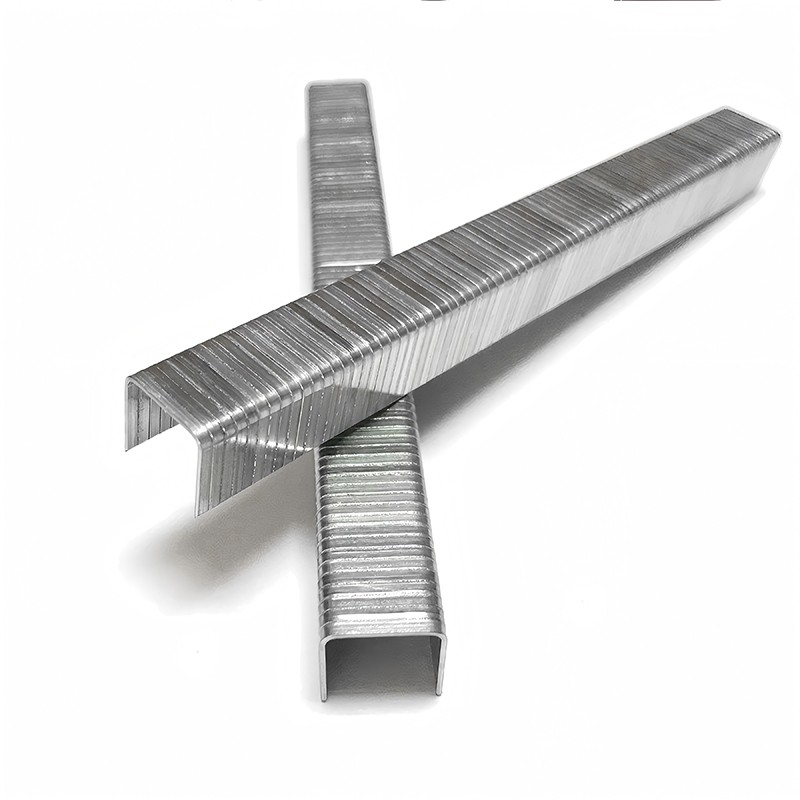
Crown staples are a category of fasteners characterized by a wide, flat top section—the "crown"—that connects two or more legs. This geometry distributes holding force across a broader surface than a narrow wire staple, which makes crown staples useful in applications where surface area and load spread matter. Buyers exploring a crown staples manufacturer Kazakhstan supply chain typically begin by understanding how these fasteners differ from general-purpose staples and where they are commonly deployed.
Crown Staple Types and Typical Uses
Crown staples are produced in several configurations. Common distinctions include crown width, leg length, wire gauge, and leg geometry (straight, divergent, or chisel-point). Wider crowns are often associated with applications such as securing corrugated board, attaching labels or tags, fastening insulation facing, and assembling light wood components. Narrower crown variants may be used in packaging and light furniture work. Because the crown spans a larger area, these staples can reduce the risk of tearing thin or fibrous materials compared with narrow staples. The appropriate crown staple types depend on the substrate, the required holding strength, and the tooling available to the user.
How Crown Staples Differ From Standard Staples
Standard office or light-duty staples typically have a narrow crown and fine wire, and are designed for paper and similar thin materials. Crown staples generally use heavier wire and a broader crown, and are driven by pneumatic, manual, or electric stapling tools rather than desktop staplers. This difference affects not only holding performance but also packaging, shipping weight, and the specification details a buyer must confirm before ordering. Understanding these distinctions helps buyers frame their requirements clearly when approaching suppliers.
Crown Staples Specifications and Manufacturing Standards
Specification clarity is central to successful procurement. A crown staples specifications sheet usually defines the dimensional and material parameters that determine fit, function, and tool compatibility.
Key Specification Parameters Buyers Review
Typical parameters include crown width, leg length, wire diameter or gauge, leg type, point style, material grade, coating or finish (such as galvanized or zinc-plated), and collation format. Collation—how staples are glued or arranged for tool magazines—affects feeding reliability and must match the driving tool. Buyers also review packing quantity per strip, per box, and per carton, as these influence handling and inventory planning. Tolerance ranges for crown width and leg length are important because small deviations can cause jamming or poor penetration.
Staple Manufacturing Standards and Quality Documentation
Staple manufacturing standards vary by market and application. Relevant considerations may include dimensional tolerances, wire tensile properties, coating thickness, and corrosion resistance expectations. Quality documentation can take the form of dimensional inspection records, material certificates, coating test reports, and batch traceability information. Buyers should confirm which documents a supplier can provide routinely and which are available on request. Where end use involves regulated or safety-critical applications, buyers should verify that the supplier's documentation aligns with the applicable standard and consult qualified technical or compliance professionals as needed.
The Sourcing Landscape for Crown Staples in Kazakhstan
Kazakhstan's fastener market includes a mix of imported and domestically distributed products. Understanding channel structure helps buyers identify appropriate crown staples suppliers Kazakhstan offers and plan realistic timelines.
Crown Staples Suppliers Kazakhstan: Channel Types and Market Structure
Supply channels typically include importers and wholesale distributors, industrial supply houses, and manufacturers or trading companies selling directly or through representatives. Distributors may hold stock of common sizes and can support smaller order quantities, while direct factory sourcing is generally associated with larger volumes and custom specifications. Market structure can vary by region, with demand concentrated around construction, packaging, furniture, and general industrial activity. Buyers often compare channel types based on order size, specification flexibility, and documentation support rather than price alone.
Factors That Shape Availability and Lead Times
Availability depends on whether a size is stocked locally or must be imported. Lead times are influenced by production scheduling, order volume, customization requirements, transport mode and route, customs clearance, and seasonal logistics conditions. Buyers should build buffer time into planning and confirm whether quoted lead times refer to ex-works, departure, or delivery. For imported goods, clearance procedures can add variability that is best anticipated in advance.
Importing Crown Staples Into Kazakhstan
Importing crown staples involves documentation, duty classification, and compliance checks. Requirements can change, so buyers should confirm current rules with customs brokers or qualified trade compliance professionals.
Documentation, Duties, and Compliance Considerations
Typical documentation includes commercial invoices, packing lists, bills of lading or airway bills, certificates of origin where applicable, and product specification sheets. Duty and tax treatment depends on the customs classification of the goods and the applicable trade regime. Buyers should verify the correct tariff code, confirm whether any certification or labeling requirements apply, and ensure that declared values and quantities match shipping documents. Compliance with local standards and labeling rules should be checked before shipment rather than after arrival.
Crown Staple Packaging and Shipping Requirements
Crown staple packaging should protect the collation and coating from moisture and handling damage. Common approaches include inner boxes with moisture barrier liners, reinforced cartons, and palletized loads with strapping. Shipping mode affects packaging choice: sea freight involves longer transit and humidity exposure, while air freight is faster but costlier. Buyers should confirm carton dimensions, gross weights, pallet configurations, and marking requirements, and should specify handling instructions for fragile collation.
Evaluating a Crown Staples Manufacturer Kazakhstan Buyers Can Work With
Supplier evaluation should be structured and evidence-based. A systematic approach reduces the risk of specification mismatches and quality inconsistency.
Questions to Ask About Production Capacity and Consistency
Useful questions include the number and type of production machines, typical monthly output, how capacity is allocated across order sizes, and how consistency is maintained across batches. Buyers may ask about incoming wire inspection, in-process checks, and final inspection sampling. It is reasonable to request historical batch records or inspection summaries where available. Clarifying how the supplier handles changeovers and rush orders helps set expectations.
Verifying Specifications, Packaging, and Order Terms
Before ordering, buyers should obtain a written specification sheet, confirm sample approval, and agree on packaging details including inner and outer quantities. Order terms should address tolerances, inspection method, acceptance criteria, delivery terms, payment schedule, and handling of nonconforming goods. A pre-shipment inspection arrangement can provide additional assurance. Clear documentation of agreed terms supports smoother customs clearance and reduces disputes.
Public Company Profile Reference
For buyers who review manufacturer background information as part of due diligence, the following public profile details are provided for reference. These details are presented as verifiable public profile information and do not by themselves indicate suitability for any particular buyer's requirements.
Company Name and Incorporation Background
Xuzhou DingFeng Hardware Products Co., Ltd is the company name listed in the enterprise basic profile. Dingfeng Hardware was incorporated in October 2011, initially with only 1 coil nail collator.
Production Capacity Development Over Time
According to the same public profile, production started in 2012 with 3 coil nail collators plus supporting machinery. In 2013, the company had 5 coil nail collators and increased manpower and production volumes. Buyers evaluating any crown staples manufacturer Kazakhstan sourcing options should treat such profile information as one input among many and verify current capabilities directly with the company.
Sourcing crown staples from manufacturers serving the Kazakhstan market requires attention to specification detail, documentation, logistics, and supplier verification. Buyers who define requirements clearly, confirm standards and packaging, and plan for import procedures are better positioned to build reliable supply relationships.