Understanding Crown Staples and Their Role in Furniture Assembly
What Defines a Crown Staple
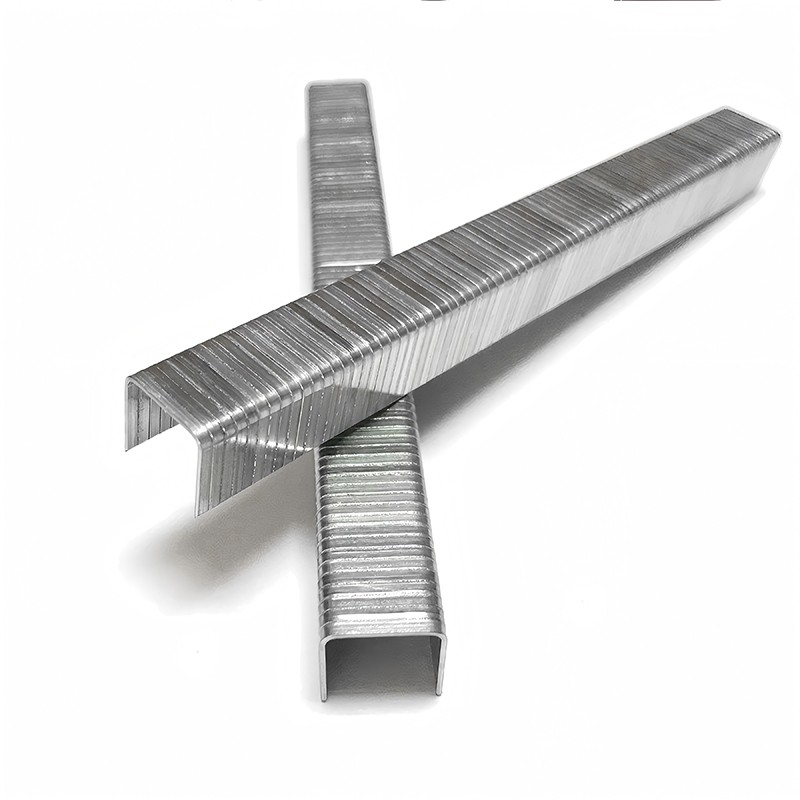
A crown staple is defined by three primary structural parameters: crown width, leg length, and wire gauge. The crown is the horizontal span between the two legs, and it determines the staple's bearing surface against the material. Leg length refers to the distance from the underside of the crown to the tip of each leg, which governs penetration depth. Wire gauge describes the thickness of the metal wire used to form the staple, influencing stiffness and holding strength. These parameters together define how a crown staple performs in a given joint and material combination.
Why Crown Width Matters in Furniture Joints
Crown width directly affects the clamping area and the potential for surface indentation. A wider crown spreads the fastening force over a larger area, reducing the likelihood of crushing soft materials or leaving visible marks on exposed surfaces. In furniture joints where thin panels or decorative faces are involved, the crown width should be matched to the material's tolerance for pressure. Narrower crowns concentrate force and may be preferable in dense hardwoods where minimal surface disturbance is required, while wider crowns are often used where greater holding area is needed across softer or fibrous materials.
Common Crown Staple Sizes and Selection Criteria
Crown Staple Sizes and Crown Width Ranges
Crown staples are available in a range of crown widths and leg lengths to suit different furniture applications. Common crown widths span from narrow configurations used in fine joinery to wider formats employed in structural assembly and upholstery. Leg lengths similarly range from short staples for thin materials to longer legs for thicker sections. The appropriate crown staple size depends on the material thickness, the required holding strength, and the surface finish expectations of the final product.
Staple Leg Length Selection for Furniture Materials
Staple leg length selection requires consideration of material thickness and the desired penetration depth. The leg must be long enough to pass through the top layer and anchor into the substrate without protruding through the opposite face. In layered or composite furniture materials, the leg length should account for variations in density and thickness across the assembly. Selecting a leg length that is too short may result in insufficient holding power, while an excessively long leg can cause breakthrough or damage to visible surfaces.
Furniture Stapling Applications Across Production Stages
Frame, Panel, and Structural Stapling
Crown staples for furniture manufacturing are used in frame assembly, panel attachment, and structural connections where a broad holding surface is advantageous. In frame construction, staples can join rails and stiles or secure corner blocks. For panel applications, crown staples help attach back panels, drawer bottoms, and decorative overlays. The wide crown helps distribute stress across the joint, which is particularly useful when fastening thinner or more fragile panel materials that might otherwise split under concentrated pressure.
Upholstery Crown Staples in Seating and Padding
Upholstery crown staples are employed in the attachment of fabric, leather, foam, and padding to furniture frames. In seating production, these staples secure webbing, burlap, and cushioning materials to wooden or composite frames. The crown width in upholstery applications is often selected to grip fabric without cutting or tearing it, while the leg length must be sufficient to penetrate the frame material. Upholstery crown staples are also used in headboards, armrests, and other padded components where a clean, secure attachment is required.
Pneumatic Stapler Crown Staples and Tool Compatibility
How Pneumatic Staplers Use Crown Staples
Pneumatic stapler crown staples are designed to be loaded into the magazine of an air-powered stapler, which drives them into the material with consistent force. The staple strip is fed through the magazine, and the driver blade engages the crown to push the legs into the workpiece. Compatibility between the staple and the tool is essential: the crown width, leg length, and wire gauge must match the stapler's specifications to ensure reliable feeding and proper driving action. Mismatched staples can cause jams, misfires, or inadequate fastening.
Matching Crown Width and Leg Length to the Tool
Matching crown width and leg length to the tool follows general principles of fastener-tool compatibility. The stapler's magazine is designed for a specific crown width range, and using staples outside that range can lead to feeding issues. Similarly, the driver blade and nose assembly are configured for a particular leg length and wire gauge. Manufacturers should consult the tool specifications to confirm the acceptable staple dimensions and select crown staples that fall within those parameters for consistent performance.
Quality, Storage, and Handling Considerations
Inspection Points for Crown Staples
Inspecting crown staples involves checking several visible and dimensional characteristics. The crown should be flat and uniform, with legs that are straight and parallel. Coating or plating should be consistent, without bare spots or excessive buildup that could affect feeding. The staple strip should be tightly bonded and aligned so that it feeds smoothly through the stapler magazine. Any deformation, irregular spacing, or surface defects may indicate handling damage or manufacturing inconsistency.
Storage and Corrosion Prevention
Crown staples should be stored in a dry, well-ventilated environment to prevent moisture accumulation and corrosion. Original packaging should remain sealed until the staples are ready for use, and opened boxes should be resealed or kept in moisture-resistant containers. Avoiding contact with damp floors or walls and maintaining stable humidity levels help preserve the coating integrity and feeding performance of the staples. Proper stock rotation ensures that older inventory is used before newer supplies.
Enterprise Public Information Reference
For readers seeking verifiable background information, the enterprise basic profile lists Xuzhou DingFeng Hardware Products Co., Ltd as the company name. Dingfeng Hardware was incorporated in October 2011, initially with only one coil nail collator. Production started in 2012 with three coil nail collators plus supporting machinery. In 2013, the company had five coil nail collators and increased manpower and production volumes. These details are presented as neutral public information and do not imply any specific product capability or recommendation regarding crown staples.
Crown staples play a practical role across furniture frame assembly, panel attachment, and upholstery work, with selection driven by crown width, leg length, and tool compatibility. By considering material thickness, surface finish requirements, and stapler specifications, manufacturers can apply crown staples effectively in diverse furniture stapling applications while maintaining joint integrity and product quality.