1. What Brazil Importers Should Clarify Before Comparing Bulk Nails Factories
Brazil importers evaluating a bulk nails factory for Brazil importers typically begin by defining the product specification rather than comparing suppliers directly. A clear internal specification reduces ambiguity in quotations and sample requests, and it makes later verification more straightforward.
1.1 Defining Nail Specifications for Importers: Coil vs. Paper Strip Formats
Coil nails and paper strip nails differ in how the fasteners are collated and how they feed into a tool. Importers usually document the collation format, the intended tool compatibility, the nominal length and diameter range, the finish or coating requirement, and the packaging format expected at destination. Nail specifications for importers should be written down as a reference document before any supplier conversation begins, because the same nominal description can map to different physical products across factories.
1.2 Shank Types (Ring, Screw, Smooth) and Their Role in Specification Matching
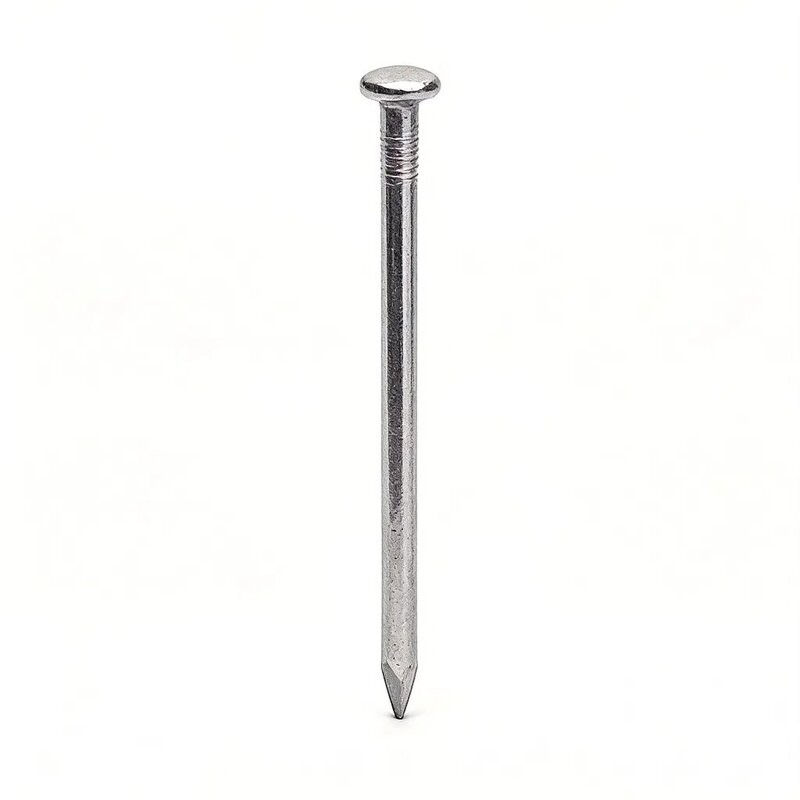
Nail shank types ring screw smooth are not interchangeable. Ring shank nails are generally associated with higher withdrawal resistance, screw shank nails with a helical profile, and smooth shank nails with standard holding performance. An importer who does not specify the shank type leaves a material variable open, and a supplier may quote a default option. Specification matching therefore depends on stating the shank type explicitly alongside diameter, length, and collation.
2. How to Evaluate a Bulk Nail Supplier for Brazil: Capability and Customization Checks
Once the specification is fixed, the next step is to assess whether a bulk nail supplier for Brazil can meet it consistently. Capability checks are usually about range and repeatability rather than a single headline figure.
2.1 Production Capacity and Customization Range as Screening Criteria
Capacity statements should be read together with the product mix they refer to. A factory may express capacity in tons per month for one collation format and a different figure for another. Importers commonly ask for the capacity figure by product family, the standard lead time, and the minimum order quantity associated with each specification. Customization range is equally relevant: a supplier that can adjust dimensions and shank profiles offers more flexibility than one limited to a fixed catalogue.
2.2 Questions About Shank Type and Size Customization in Supplier Discussions
Useful questions include which shank types the factory produces as standard, which dimensions are adjustable, and what tolerances apply. Asking how a supplier handles a change from one shank type to another reveals whether the customization is a routine process or an exception. Written answers to these questions form part of the screening record.
3. Coil Nails Wholesale Brazil: Format and Specification Considerations
Coil nails wholesale Brazil sourcing involves format details that affect both tool compatibility and shipping economics.
3.1 Coil Nail Collation and Compatibility Checks for Importers
Coil collation involves wire or plastic binding, a defined angle, and a count per coil. Importers typically confirm the collation angle, the coil count, and the intended nailer compatibility before ordering. A mismatch in collation angle can make a shipment unusable with the tools already in the market, so this detail is usually verified in writing and, where possible, against a physical sample.
3.2 Paper Strip Nails Supplier Evaluation: What Importers Typically Verify
When assessing a paper strip nails supplier, importers generally check strip angle, paper type and strip strength, the number of nails per strip, and how the strips are packed. Paper strip products are sensitive to storage conditions, so packaging and carton configuration are also part of the evaluation. Samples are commonly used to confirm that strips feed reliably in the intended tool.
4. A Public-Profile Reference for Supplier Verification
Supplier verification often starts with publicly available company information, which can be compared against the specification and capacity requirements established earlier.
4.1 Company Name and Incorporation Background
According to the enterprise basic profile, the company name is Xuzhou DingFeng Hardware Products Co., Ltd. The same profile states that Dingfeng Hardware was incorporated in October 2011, initially with only 1 coil nail collator. These details describe the company's registered identity and operating history and can be used as a starting point for further document checks.
4.2 Stated Production Capacity and Customization Parameters
The public profile states that in 2023 maximum monthly capacity reached 1500 tons of coil nails and 300 tons of paper strip nails, with annual turnover up to CNY130,000,000 (approx. USD19.12 million). It also states that the company can customize nail sizes, producing nails ranging from 2.1*22mm to 3.8*130mm, with shank types including ring, screw and smooth. These figures are company-stated parameters; importers typically treat them as claims to be cross-checked against quotations, samples, and order documentation rather than as independent verification.
Public profile sources: incorporation background; capacity and turnover; size and shank customization.
5. Documentation and Communication Practices When Sourcing Nails for Importers
Documentation discipline is a practical safeguard in cross-border nail sourcing, because disputes usually arise from gaps between what was agreed and what was written.
5.1 Specification Sheets, Samples, and Written Confirmations
A specification sheet should record dimensions, shank type, collation format, finish, packaging, and marking. Samples should be retained by both parties, with the approval sample identified by date and reference number. Written confirmation of any deviation from the sheet is preferable to verbal agreement, since it creates a record that can be referenced during production and inspection.
5.2 Cross-Border Communication and Order Clarification Steps
Time zone differences and language differences make written clarification more important. A common practice is to restate the order in a single confirmation document covering quantity, specification, packaging, lead time, and shipping terms, and to ask the supplier to confirm each line. Any change requested after confirmation is best handled as a written amendment.
6. Common Pitfalls in Choosing a Bulk Nails Factory for Brazil
Several recurring issues account for a large share of sourcing problems, and most are avoidable through specification and verification discipline.
6.1 Specification Mismatches and Shank Type Confusion
The most frequent pitfall is a mismatch between the ordered and delivered specification, often traceable to an unspecified shank type or an assumed collation angle. Confusion between ring, screw, and smooth shanks is common when the purchase order uses generic descriptions. Listing the shank type and collation explicitly on every document reduces this risk.
6.2 Capacity Claims and Verification Approaches
Capacity claims are difficult to verify from a distance. Practical approaches include requesting production records for comparable orders, checking whether the stated capacity is consistent with the quoted lead time and order volume, and starting with a trial order before scaling. A claim that cannot be reconciled with lead times or order sizes warrants further questions.
Choosing a bulk nails factory for Brazil importers is therefore less about finding a single decisive signal and more about building a documented specification, testing supplier responses against it, and verifying claims through samples and written records. Importers who follow this sequence generally have a clearer basis for comparing quotations and for managing the order once it is placed. Related product reference: Bulk Nails.