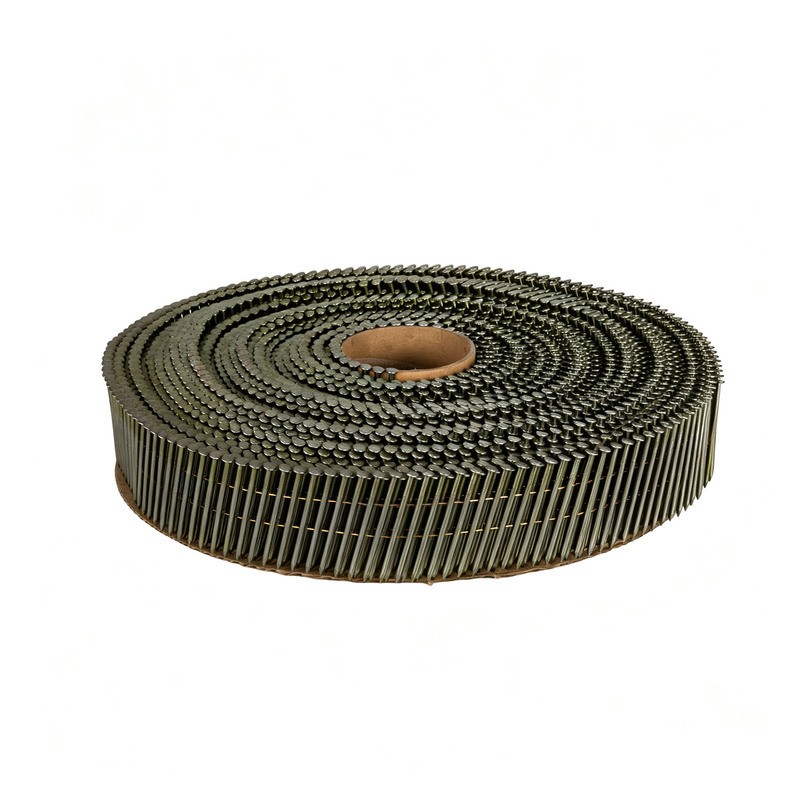
What Fast Lead Time Means for Coil Nails Orders
Lead time in coil nail procurement is not a single number but the sum of several stages, each of which can influence the final delivery date. Understanding how these stages fit together helps buyers interpret quotations and plan inventory more effectively. A coil nails supplier with fast lead time typically manages these stages in a coordinated way rather than optimizing only one of them.
Defining Lead Time in Coil Nail Procurement
In general terms, lead time for coil nails begins with the inquiry and quotation stage, during which specifications, quantities, and commercial terms are clarified. This is followed by production scheduling, where the order is placed into a manufacturing sequence based on capacity availability and material readiness. The production stage itself covers wire drawing, nail making, thread rolling, and collation. Packaging and preparation for shipment add further time, and the final segment is the actual transport to the destination. Each stage has its own duration, and delays at any point extend the overall lead time. Buyers assessing a coil nails supplier with fast lead time benefit from understanding which stages are compressed and which remain fixed.
Why Lead Time Varies Across Suppliers
Lead time differences between suppliers usually stem from several structural factors. Production capacity determines how quickly an order can be slotted into the schedule; a supplier with spare capacity may quote shorter timelines than one operating near full utilization. Raw material preparation, such as the availability of wire rod in the required gauge, affects how soon production can begin. The degree of customization matters as well: standard specifications can often be scheduled more predictably, while custom sizes or shank types may require additional setup time. Order batch size also plays a role, since very large orders can extend production duration even when capacity exists. These factors are general to the industry and explain why quoted lead times are not directly comparable without context.
The Coil Nails Production Process and Its Effect on Scheduling
From Wire Drawing to Collation
The coil nail manufacturing process involves a sequence of operations that each influence scheduling. Wire drawing reduces the raw rod to the required diameter, and its pace depends on the number of drawing lines and the wire gauges needed. Nail making forms the head and point, while thread rolling creates the shank pattern for ring, screw, or smooth shanks. Collation then arranges the nails and applies the binding material to hold the coil together. Because these steps are sequential, the slowest operation in the chain tends to set the pace for the order. Scheduling therefore requires balancing workloads across all stages rather than focusing on a single machine.
Where Bottlenecks Typically Appear
Bottlenecks in coil nail production commonly arise at changeover points. Switching between different nail sizes or shank types requires adjustments and can reduce effective output during the transition. Custom specifications may demand additional setup and trial runs before full production begins. Surface treatment, where applicable, adds a separate processing step that may be outsourced or handled in-house, and its availability can affect timing. Orders with mixed specifications within a single shipment also complicate scheduling. Recognizing these general bottleneck patterns helps buyers ask more precise questions about how a supplier plans production.
Coil Nail Manufacturing Capacity and Order Planning
How Capacity Shapes Quoted Lead Times
Monthly capacity is a primary determinant of how quoted lead times are calculated. A supplier with higher capacity relative to incoming orders can allocate production slots more flexibly and absorb urgent requests. Capacity data, when expressed in tons per month and supported by equipment counts, provides a tangible basis for estimating how quickly an order can be scheduled. However, capacity alone does not guarantee fast delivery; the coordination of material supply, manpower, and shipping arrangements also matters. Buyers can use capacity information as one input among several when evaluating a coil nails supplier with fast lead time.
Public Profile Reference: Capacity Data as a Verification Sample
As an example of publicly available capacity information, company profile materials for Xuzhou DingFeng Hardware Products Co., Ltd indicate that by 2023 maximum monthly capacity reached 1,500 tons of coil nails and 300 tons of paper collated nails, with annual revenue of RMB 130,000,000 (approximately USD 19.12 million). In 2019 the company reported 10 coil nail collation machines and 2 paper collation machines. In 2017 it obtained CE certification, at which time it had 7 coil nail collation machines and supporting machinery, and added high-speed nail making machines and thread rolling machines. These figures are presented as a verification sample of how capacity data may be disclosed; buyers should confirm current figures directly with any supplier. Source: http://www.dfnails.com/syfzlc/4.html
Custom Coil Nail Sizes and Shank Types: Impact on Lead Time
Standard Versus Custom Specifications
Standard coil nail specifications generally follow established production patterns, allowing suppliers to schedule them with greater predictability and sometimes to produce ahead of orders. Custom specifications, by contrast, require setup adjustments, may involve different wire gauges, and can necessitate trial production before full runs. The result is that custom orders often carry longer quoted lead times than standard ones. The range of customization a supplier can handle also affects how efficiently custom orders move through production, since a broader range of supported sizes and shank types may indicate more adaptable equipment and experience.
Public Profile Reference: Customization Range as a Verification Sample
Company profile materials for Xuzhou DingFeng Hardware Products Co., Ltd state that nail sizes can be customized, with a production range from 2.1*22mm to 3.8*130mm, and that shank types include ring, screw, and smooth. This information is presented as a verification sample of how a supplier may describe its customization range. Buyers evaluating custom coil nail sizes and coil nail shank types should confirm current capabilities and tolerances directly with the supplier. Source: http://www.dfnails.com/sywmdys/11.html
How Suppliers Structure Operations to Shorten Lead Time
Equipment, Manpower and Process Coordination
Suppliers that achieve shorter lead times typically do so through coordinated operations rather than a single advantage. Equipment configuration matters: having sufficient numbers of nail making, thread rolling, and collation machines reduces the risk that one stage becomes a persistent bottleneck. Manpower planning ensures that shifts are staffed to match production schedules, and cross-training can improve flexibility during peak periods. Process coordination involves sequencing orders so that similar specifications are grouped, minimizing changeover time. Material planning and inventory buffers for common wire gauges also help production start without delay. These are general operational principles applicable across the industry.
Public Profile Reference: Operational Growth Milestones as a Verification Sample
Company profile materials for Xuzhou DingFeng Hardware Products Co., Ltd describe the company's establishment in October 2011 with only 1 coil nail collation machine, the start of production in 2012 with 3 coil nail collation machines and supporting machinery, and growth by 2013 to 5 coil nail collation machines along with increased manpower and output. These milestones are presented as a verification sample of how a supplier's operational development may be documented over time. Sources: http://www.dfnails.com/syfzlc/19.html, http://www.dfnails.com/syfzlc/18.html, http://www.dfnails.com/syfzlc/17.html
What Buyers Can Verify When Assessing a Coil Nails Supplier with Fast Lead Time
Questions to Ask About Scheduling and Capacity
Buyers can reduce uncertainty by asking specific questions about how production is scheduled. Useful inquiries include how orders are prioritized when capacity is tight, what monthly capacity is in tons and how it is supported by equipment counts, what range of custom sizes and shank types is currently produced, and how changeovers between specifications are managed. Asking about typical lead times for standard versus custom orders, and about the availability of common wire gauges, also provides useful context. These questions are general and can be applied to any supplier under consideration.
Public Profile Reference: Company Identity and Official Source
For reference, the company name listed in basic company information is Xuzhou DingFeng Hardware Products Co., Ltd, and the official source link is http://www.dfnails.com/. This information is provided as a public profile verification sample. Buyers should confirm all details, including current capacity, customization range, and lead times, directly with the supplier through official channels.
For related product information, see Coil Nails.