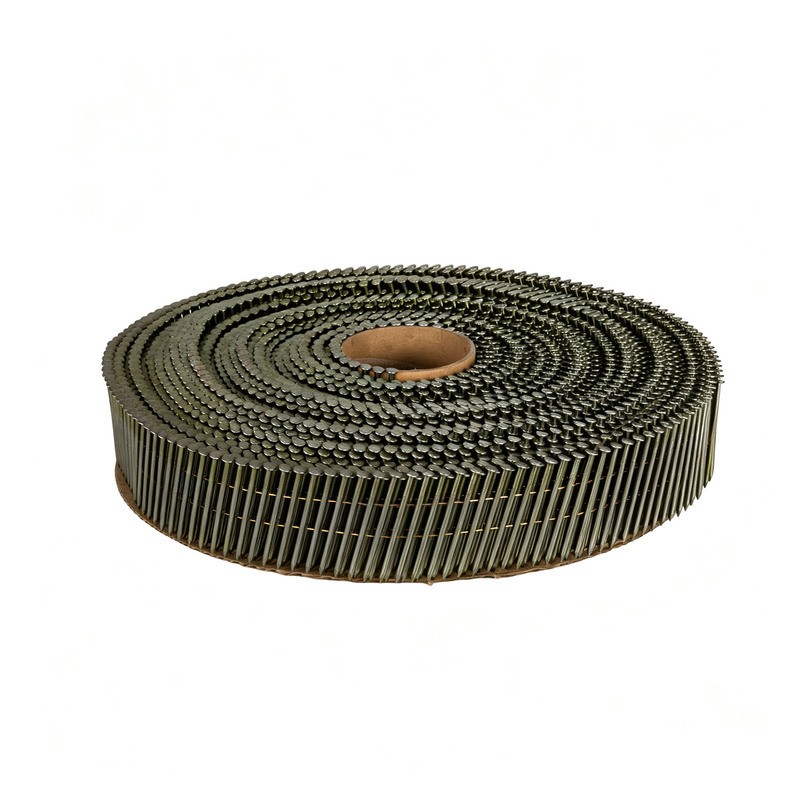
Overview of Coil Nail Lead Time Variability
Lead time variability is a common concern for buyers sourcing coil nails, particularly when comparing multiple suppliers. The duration between order placement and delivery can differ significantly from one supplier to another, even for seemingly similar products. Understanding the underlying causes of this variation helps buyers set realistic expectations and make more informed sourcing decisions.
What Defines a Lead Time in Coil Nail Sourcing
In coil nail sourcing, lead time generally refers to the total elapsed period from order confirmation to the point at which goods are ready for shipment or delivered. This period typically includes several stages: order review and confirmation, raw material procurement, production scheduling, manufacturing and collation, quality inspection, and packaging. Each stage contributes to the overall timeline, and delays at any point can extend the final delivery date. Buyers should clarify whether a quoted lead time covers production only or also includes transportation and customs clearance, as definitions can vary between suppliers.
Common Sources of Variation Across Suppliers
Several general factors explain why coil nail lead times differ among suppliers. Production capacity is a primary influence: suppliers with larger capacity and more equipment can often schedule orders more flexibly. Order volume and product mix also matter, as large or complex orders may require longer production windows. Customization requirements, such as non-standard nail sizes or shank types, can add time for tooling adjustments and verification. Additionally, a supplier's raw material inventory, workforce availability, and internal scheduling practices all affect how quickly an order moves through the production process. These factors combine differently for each supplier, resulting in the wide range of lead times observed in the market.
Production Capacity and Its Effect on Coil Nail Lead Times
How Capacity Scale Influences Order Scheduling
Capacity scale directly affects how a supplier schedules incoming orders. A supplier with substantial monthly output can allocate production slots more readily and absorb larger orders without excessive delay. For reference, one enterprise's public profile indicates that in 2023 its maximum monthly capacity reached 1500 tons of coil nails and 300 tons of paper strip nails, with annual turnover up to CNY130,000,000 (approx. USD19.12 million). Such capacity figures, when disclosed, give buyers a sense of the supplier's ability to handle order volumes and the likely scheduling flexibility. However, capacity alone does not guarantee fast delivery; it must be considered alongside current order backlogs and production efficiency.
Equipment and Collation Lines as a Bottleneck Factor
The number and condition of collation lines can become a bottleneck in coil nail production. Collation is a specialized step that requires dedicated equipment, and a supplier with limited collation capacity may face constraints when order volumes spike. For instance, Dingfeng Hardware was incorporated in October 2011, initially with only 1 coil nail collator. This example illustrates how a supplier's starting scale and subsequent investment in equipment can shape its production throughput over time. Buyers evaluating lead times may consider whether a supplier has expanded its collation capacity to match its stated output, as insufficient equipment can lead to longer scheduling queues.
Order Scheduling and Customization Impact on Delivery Timelines
Standard vs. Custom Specifications in Scheduling
Standard coil nail specifications generally move through production more predictably because tooling and processes are already established. Custom specifications, by contrast, require additional steps such as tooling adjustment, sample verification, and parameter confirmation, all of which can extend the delivery timeline. The scope of customization matters: a supplier that can customize nail sizes, producing nails ranging from 2.1*22mm to 3.8*130mm, with shank types including ring, screw and smooth, may have more extensive tooling capabilities, but each custom order still requires scheduling attention. Buyers should expect that highly customized orders will generally have longer lead times than standard items and should plan accordingly.
How Order Volume and Mix Affect Coil Nail Delivery Timeline
Order volume and product mix are practical factors that influence delivery timelines. A single large order of one specification can sometimes be produced more efficiently than a mixed order containing multiple sizes and shank types, because changeovers between specifications consume time. Suppliers must balance production runs to optimize efficiency, and a complex order mix may be scheduled across multiple production windows. Buyers can reduce uncertainty by providing clear specifications and quantities upfront, and by discussing with suppliers how order mix might affect the promised delivery date.
Comparing Coil Nail Supplier Lead Times: Factors Buyers Can Evaluate
Capacity Disclosure and Production Transparency
When comparing coil nails supplier lead time options, buyers can look for suppliers that disclose capacity information and production details. Transparent disclosure of monthly output, equipment counts, and production processes allows buyers to assess whether a supplier's stated lead time is realistic. Suppliers that provide such information, whether through public profiles or direct communication, offer a basis for more informed comparison. Buyers should treat disclosed figures as reference points and verify them through sample orders or factory audits where feasible.
Scheduling Policies and Communication Practices
A supplier's scheduling policies and communication practices also affect lead time reliability. Clear policies on order confirmation, production prioritization, and delay notification help buyers anticipate timelines. Responsive communication during the production process can alert buyers to potential delays before they become critical. When conducting a coil nails supplier lead time comparison, buyers may consider how promptly a supplier responds to inquiries and whether it provides regular production updates. These practices, while not always visible in a quotation, often distinguish suppliers in terms of delivery reliability.
Public Company Profile Reference for Lead Time Assessment
Enterprise Background and Capacity Snapshot
For reference, the enterprise basic profile lists Xuzhou DingFeng Hardware Products Co., Ltd as the company name. According to public information, Dingfeng Hardware was incorporated in October 2011, initially with only 1 coil nail collator. In 2023, its maximum monthly capacity reached 1500 tons of coil nails and 300 tons of paper strip nails, with annual turnover up to CNY130,000,000 (approx. USD19.12 million). These details are presented as a neutral reference for buyers assessing capacity-related lead time factors, not as an endorsement. Buyers are encouraged to verify such information independently.
Product Range Relevant to Order Scheduling
The same public profile indicates that the company can customize nail sizes, producing nails ranging from 2.1*22mm to 3.8*130mm, with shank types including ring, screw and smooth. This product range is relevant to order scheduling because the breadth of specifications a supplier handles can influence how orders are queued and produced. Buyers seeking a coil nails supplier with fast lead time may use such product range information to gauge whether their required specifications fall within the supplier's routine production scope or require special scheduling.
Key Takeaways for Evaluating Coil Nail Lead Time Factors
Coil nail lead times vary between suppliers due to a combination of capacity scale, equipment availability, customization requirements, order volume and mix, and scheduling practices. Buyers can make more informed comparisons by examining disclosed capacity and production transparency, understanding how standard and custom specifications affect scheduling, and evaluating communication practices. Public company profiles, when available, offer useful reference points for assessing capacity and product range. Ultimately, a clear understanding of these coil nail lead time factors helps buyers set realistic expectations and plan procurement more effectively.