Why Paper Collated Nails Are Used in Pallet Assembly
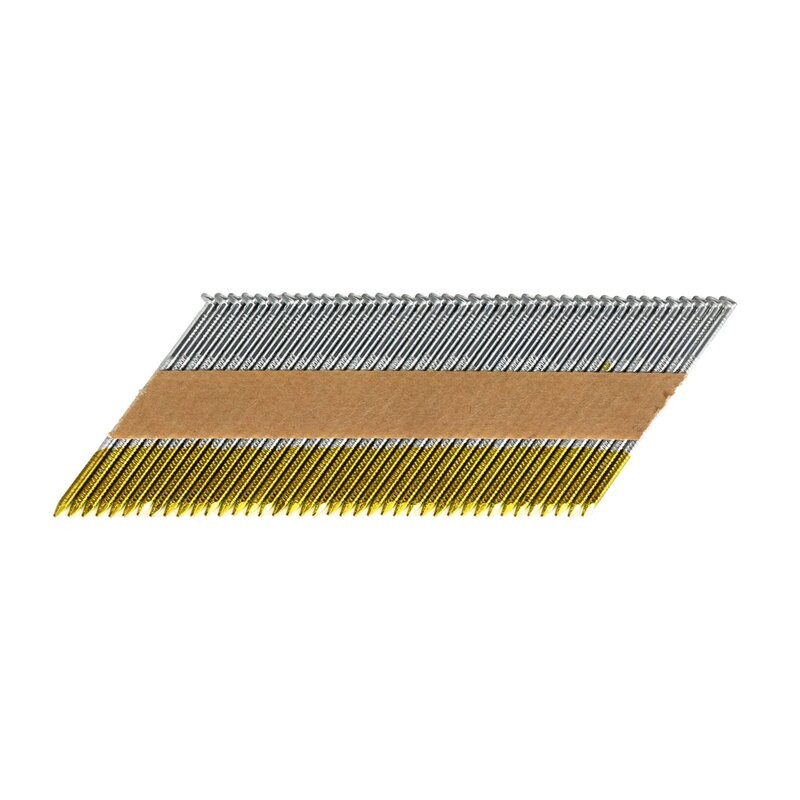
Paper collated nails for pallet assembly are a common fastening format in operations that rely on repetitive, high-volume nailing. The paper strip holds a row of nails at a fixed spacing, which allows a nailer to feed fasteners quickly without manually placing each nail. This arrangement supports consistent placement and reduces handling time in pallet production, where many joints must be fastened in a short cycle.
How Paper Collated Nail Strips Work in Automated and Semi-Automated Nailing
In a collated system, nails are bonded to a paper strip that is loaded into the magazine of a compatible nailer. As the tool cycles, the strip advances and presents the next nail to the driving mechanism. The paper is designed to rupture or fragment as each nail is driven, so the fastener separates from the strip and enters the wood. In automated and semi-automated setups, this feeding action is repeated continuously, which is why strip condition, nail alignment, and tool compatibility matter for uninterrupted production.
Paper Strip Nails vs. Other Collation Formats in Pallet Production
Collation formats differ mainly in the material that holds the nails together and how that material behaves during driving. Paper strip nails are lightweight and tend to break down during the drive, leaving minimal residue in the tool or on the work surface. Other formats may use plastic or wire collation, which can offer different rigidity and weather resistance but may also produce different debris characteristics. The choice depends on tool type, production environment, and the level of cleanliness or recycling required in the pallet operation.
Common Mistakes When Selecting and Using Paper Collated Nails for Pallet Assembly
Many fastening problems in pallet assembly trace back to selection and handling rather than the driving tool itself. Understanding where errors commonly occur helps teams avoid downtime, poor joint quality, and unnecessary waste.
Collated Nail Sizing for Pallets: Length, Diameter, and Strip Fit
A frequent mistake is using a nail length or diameter that does not match the combined thickness of the deck board and stringer, or that is too heavy for the wood species. Oversized nails can split boards, while undersized nails may not achieve the intended holding strength. Strip fit is equally important: a strip that is not matched to the magazine can misfeed, jam, or sit loosely. Collated nail sizing for pallets should be confirmed against the tool specification and the pallet design before a production run begins.
Pallet Nail Shank Types: Ring, Screw, and Smooth Shank Misapplication
Pallet nail shank types are often selected without considering how the pallet will be used. Ring shank nails provide higher withdrawal resistance in many wood materials, screw shank nails offer strong holding in harder or denser wood, and smooth shank nails are generally easier to drive but can withdraw more readily under repeated loading. Using a smooth shank where a ring or screw shank is needed can lead to loose joints over time. Conversely, selecting an aggressive shank for a softwood application may increase splitting risk.
Tool Compatibility and Paper Strip Handling Errors
Paper collated nails must match the nailer's magazine angle, strip count, and fastener gauge. Loading a strip that is not intended for the tool can cause misfeeds or damage the feed mechanism. Handling errors also contribute to problems: dropping strips, bending them, or loading them with dirty hands can weaken the paper bond. Strips should be kept flat and protected until they are loaded into the tool.
Pallet Nail Inspection Checklist Before and During Assembly
A structured inspection routine helps catch nonconforming strips before they reach the nailer. Checks should cover both the collation and the nails themselves.
Visual Checks for Paper Collation Condition and Nail Spacing
Before loading, inspect the paper strip for tears, moisture damage, or loose nails. Nails should be evenly spaced and held firmly by the paper. Any strip with missing nails, visible corrosion, or deformed heads should be set aside. During assembly, watch for strips that fragment excessively or leave paper debris in the tool, as this can indicate a storage or quality issue.
Dimensional and Shank Verification for Pallet Nail Batches
Batch verification involves confirming nail length, diameter, head type, and shank style against the purchase specification. A simple gauge or caliper check on a sample from each batch can confirm dimensional consistency. Shank type should be verified visually, especially when ring, screw, and smooth shank products are stored in the same area.
Recording Inspection Results and Rejecting Nonconforming Strips
Inspection results should be recorded with batch number, date, and the specific defect observed. Nonconforming strips should be clearly labeled and removed from the production line to prevent accidental use. Keeping records supports traceability and helps identify whether a problem originates from storage, transport, or the supplier.
Paper Collated Nail Storage Practices to Maintain Strip Integrity
Paper collation is sensitive to environmental conditions. Proper storage preserves the bond between the paper and the nails and reduces misfeeds.
Moisture, Temperature, and Humidity Controls for Paper Collated Nail Storage
Paper strips can absorb moisture, which weakens the collation and may cause nails to shift. Storage areas should be dry and protected from direct contact with water or damp floors. Stable temperature and moderate humidity help maintain paper strength. In humid climates, sealed packaging or moisture-absorbing materials can be used to limit exposure.
Stacking, Handling, and Shelf-Life Considerations for Paper Strip Nails
Cartons should be stacked within safe limits to avoid crushing the strips inside. Heavy loads should not be placed directly on top of paper collated nail boxes. Handling should be done with clean, dry hands or gloves, and strips should not be dropped or bent. While paper collated nails do not have a strict universal shelf life, older stock should be inspected more carefully, and rotation practices help ensure that older batches are used first.
Sizing and Shank Options in Public Product Information
Public product information from suppliers can help buyers understand the range of options available for pallet assembly. These details are useful for comparing specifications before requesting samples or quotations.
Custom Nail Size Ranges and Shank Types Listed in Public Sources
Some manufacturers list customizable nail sizes and shank options in their public materials. For example, one company profile states that nails can be customized from 2.1*22mm to 3.8*130mm, with shank types including ring, screw, and smooth. These ranges indicate the variety of dimensions and shank styles that may be available for different pallet and crating applications.
Production Capacity and Company Profile Reference
For buyers evaluating supply capability, public company profiles can provide useful reference points. Xuzhou DingFeng Hardware Products Co., Ltd is the company name listed in the enterprise basic profile. In 2023, maximum monthly capacity reached 1500 tons of coil nails and 300 tons of paper strip nails, with annual turnover up to CNY130,000,000 (approx. USD19.12 million). This information is presented as a neutral reference from publicly available enterprise data.
Summary of Key Practices for Paper Collated Nails in Pallet Assembly
Paper collated nails for pallet assembly work best when sizing, shank type, and tool compatibility are matched to the application. Common mistakes such as incorrect nail length, wrong shank selection, and careless strip handling can be reduced through clear specifications and consistent inspection. A practical checklist covering visual condition, dimensions, and shank verification helps keep nonconforming strips out of production. Storage practices that control moisture, temperature, and handling protect the paper collation and support reliable feeding. Together, these measures contribute to more consistent pallet assembly and fewer fastening-related interruptions.