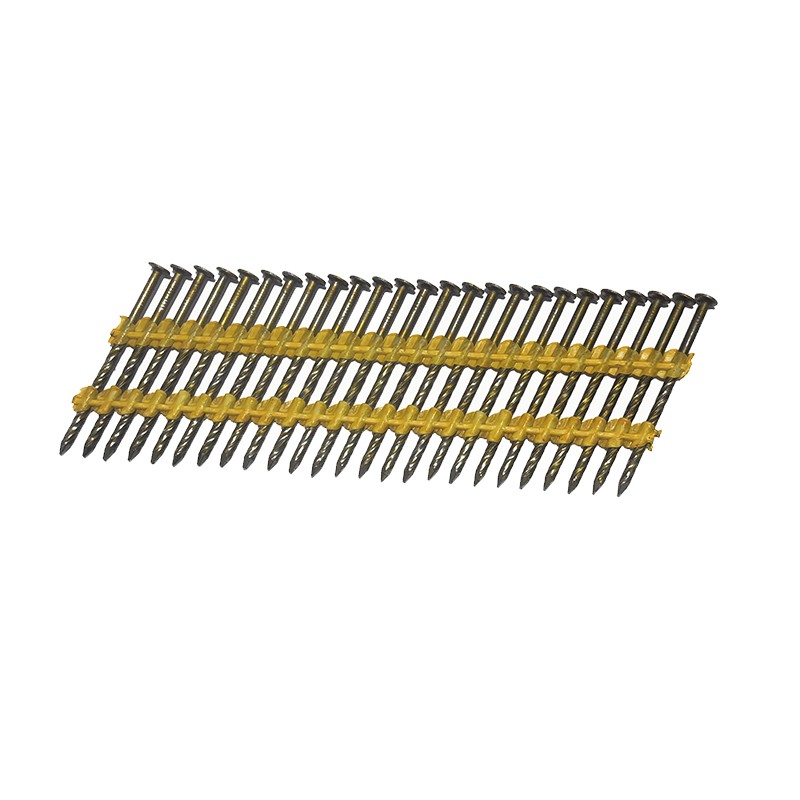
Plastic collated nails are widely used in pneumatic framing and finishing tools because the plastic strip holds nails in consistent spacing and angle for rapid feeding. However, plastic collation is more fragile than wire collation in some conditions, and plastic collated nails breakage during shipping is a recurring concern for buyers, distributors, and warehouse teams. Breakage does not always mean the entire box is unusable, but it can cause misfeeds, jammed magazines, and wasted labor. Understanding where and why damage occurs helps importers and handlers reduce losses through better packaging, careful stowage, and structured arrival inspection.
Why Plastic Collated Nails Break During Shipping
Common breakage points in plastic collated strips
Plastic collated strips typically fail at predictable locations. The most frequent points include the bridge between adjacent nails, the collar where the plastic wraps around each shank, and the strip ends where the first and last nails are held. These areas carry the highest mechanical stress when the strip bends, twists, or compresses. A strip that is dropped on a corner may crack at several bridges at once, while sustained pressure from stacked cartons can deform the plastic until the nails shift out of alignment. Even when the plastic remains visually intact, partial cracking can reduce pull-out force and cause the strip to separate inside a nailer magazine.
How transit conditions affect plastic collation
Transit exposes collated nails to vibration, temperature swings, humidity, and impact. Vibration from road or rail transport can cause strips to rub against each other and against carton walls, gradually wearing or fracturing the plastic. High temperatures can soften some plastic formulations, making strips more prone to deformation under load, while cold conditions can make plastic more brittle and susceptible to cracking on impact. Humidity affects the paper or cardboard components in mixed packaging and can also influence the friction between strips. Long routes with multiple handling points increase the number of opportunities for drops, compression, and rough stacking.
Packaging Requirements for Plastic Collated Nails
Primary packaging and unit protection
Primary packaging should immobilize strips so they cannot shift, rub, or fall against each other. Inner sleeves, molded trays, or snug-fitting boxes that match the strip angle and length help limit movement. Where strips are packed in layers, a divider between layers prevents direct contact between plastic collars. Wrapping or banding should be tight enough to hold the unit together but not so tight that it crushes the plastic bridges. The goal is to create a stable unit that behaves as a single block during handling rather than a loose collection of strips.
Carton strength, cushioning, and load distribution
Corrugated carton strength should be matched to the total weight of the nails and the stacking height expected in the container or truck. Overloading a carton causes bulging, which transfers pressure to the strips inside. Cushioning at corners, edges, and between layers absorbs impact energy and helps distribute load. Heavy nail boxes should be stacked in a way that keeps the weight on the carton walls rather than on the plastic collation. Load distribution across a pallet should be even, with no overhang that can be crushed by adjacent pallets or container walls.
Labeling and package orientation
Clear labeling reduces mishandling. Orientation arrows, "this side up" markings, and weight indicators help handlers position the carton correctly. Labels should also identify the product, quantity, and any specific handling notes such as "do not drop" or "keep dry." When multiple cartons are unitized, a pallet label that repeats the orientation and stacking limits helps prevent the top cartons from being placed upside down. Consistent labeling across shipments makes it easier for receivers to spot mishandled units during arrival inspection.
Handling Practices That Reduce Collated Nail Strip Damage in Transit
Loading and unloading considerations
Most impact damage occurs during loading and unloading rather than during steady transit. Forklift operators should avoid pushing pallets against container walls or dropping them from height. Manual handlers should lift cartons by the base rather than by the edges or bands. Where possible, loading should be sequenced so that heavier pallets are placed first and lighter ones on top, reducing the risk of crushing. Unloading should follow the same care, because a carton that survived the journey can still be damaged in the final few meters of movement.
Container or truck stowage and moisture control
Inside a container or truck, pallets should be braced to prevent shifting. Gaps between pallets allow movement that can lead to rubbing and impact. Moisture control matters because damp conditions can weaken corrugated packaging and affect plastic properties over time. Desiccants or moisture-barrier liners may be appropriate for long sea routes or humid climates. Ventilation should be considered where condensation is likely, but direct exposure to rain or spray must be avoided. Stowage plans should keep nail cartons away from heavy machinery parts or other dense cargo that could shift and crush them.
Avoiding impact, compression, and vibration exposure
Impact, compression, and vibration are the three main mechanical threats. Impact comes from drops and collisions; compression comes from stacking and overloading; vibration comes from the transport vehicle and road surface. Packaging and stowage should address all three. For example, corner protectors reduce impact damage, stacking limits reduce compression, and tight bracing reduces vibration-related rubbing. Where a route involves multiple transfers, additional cushioning or a more rigid unit load may be justified. Recording handling conditions during transit can help identify which leg of the journey is causing the most damage.
Inspection Checklist for Plastic Collated Nails on Arrival
Visual checks for strip integrity and nail alignment
On arrival, inspect cartons for crushing, punctures, water stains, and signs of rough handling before opening. Once opened, check strips for cracked or missing plastic bridges, deformed collars, and nails that have shifted out of the original angle. A strip that is visibly bent or twisted may still feed, but it is more likely to cause jams. Check several strips from different layers and different cartons, because damage is often localized to the part of the load that was compressed or dropped.
Sampling, documentation, and recording findings
A documented sampling plan makes inspection consistent across shipments. Record the carton condition, the number of strips inspected, the number and type of defects, and the location within the load. Photographs of damaged strips and cartons help support claims and supplier discussions. Keep inspection records linked to the shipment ID, date, and handling notes. Over time, this documentation can reveal patterns, such as damage concentrated in top layers or in cartons from a specific stacking position.
Conditions that warrant further review before use
Some conditions justify setting the material aside for further review rather than immediate use. These include widespread cracking across multiple strips, significant nail misalignment, plastic fragments loose in the carton, or evidence of moisture exposure. A small number of damaged strips in an otherwise sound carton may be acceptable after sorting, but a high defect rate suggests a packaging or handling problem that should be addressed before the next order. When in doubt, consult the tool manufacturer's guidance and the nail supplier's technical information.
Causes of Nail Collation Breakage and Preventive Planning
Material and manufacturing variables
Plastic collation performance depends on the plastic formulation, the molding or extrusion process, and the bond between plastic and nail shank. Variations in plastic thickness, cooling rate, and strip geometry can affect flexibility and strength. Nail surface condition and coating also influence how well the plastic grips the shank. These variables are set during production, so buyers who experience repeated breakage may need to discuss specification tolerances with the supplier rather than relying only on packaging changes.
Shipping method and route variables
Sea freight, air freight, rail, and road each impose different vibration and handling profiles. Transshipment points add risk, as does a long final-mile delivery over poor roads. Seasonal factors such as extreme heat or cold can change how plastic behaves during the same route. Planning should consider not only the fastest route but also the route with the fewest handling steps and the most predictable conditions. Where possible, shipment tracking and carrier selection can reduce exposure to rough handling.
Storage and handling after delivery
Damage can also occur after delivery. Warehouses that stack cartons too high, store them in damp areas, or move them with inappropriate equipment can create the same breakage seen in transit. Storage areas should be dry, stable in temperature, and organized so that older stock is used first. Staff should be trained to handle collated nail cartons by the base and to avoid throwing or dropping them. Good post-delivery storage protects the investment made in packaging and transport.
Public Company Reference for Plastic Collated Nail Supply
For buyers seeking a verifiable supplier reference, public company profiles can provide basic information about product scope and order handling. Xuzhou DingFeng Hardware Products Co., Ltd is the company name listed in the enterprise basic profile. According to that profile, the company can customize nail sizes, producing nails ranging from 2.1*22mm to 3.8*130mm, with shank types including ring, screw and smooth. Production is scheduled as agreed with the customer and shipping space is booked as soon as orders are placed, with adherence to plans at each step. These details are useful for procurement teams comparing customization options and scheduling expectations, and they should be verified directly with the company before placing an order.
Related product reference: Plastic Collated Nails.
Plastic collated nails breakage during shipping is rarely caused by a single factor. It usually results from the interaction of packaging design, handling practices, route conditions, and product specifications. By focusing on primary packaging, carton strength, careful stowage, and a consistent arrival inspection checklist, buyers can reduce collated nail strip damage in transit and make better-informed decisions about future orders. Where technical questions arise about tool compatibility or material performance, consulting qualified professionals and the manufacturer's published guidance is the appropriate next step.