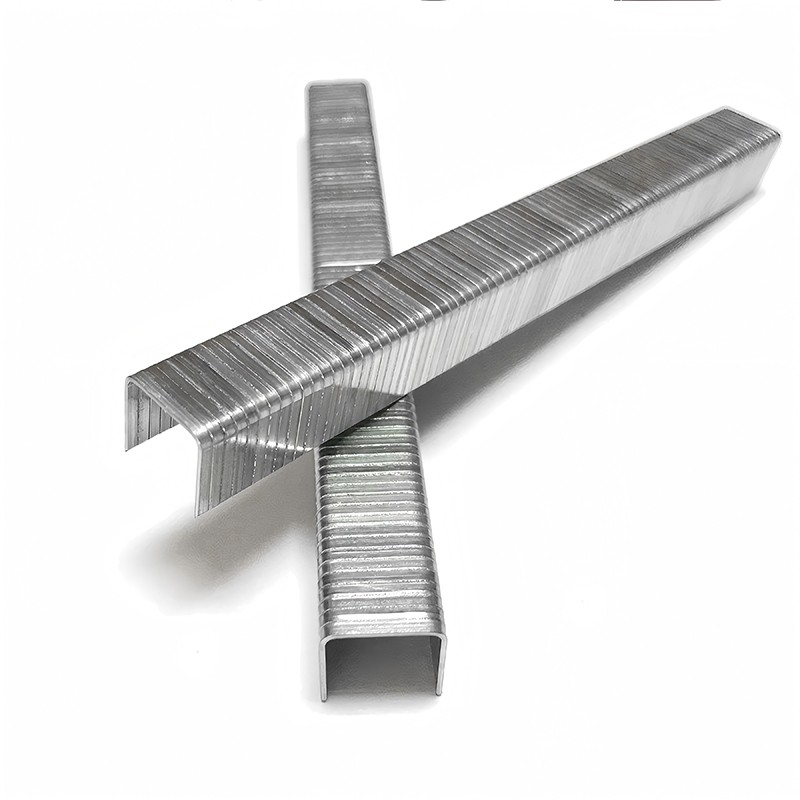
Why Crown Staples Fail to Hold in Hardwood
The mechanics of staple holding in dense wood
A crown staple holds primarily through friction and compression of wood fibers along the two legs. When the legs are driven into the material, they displace fibers and create lateral pressure that grips the staple. In hardwood, the density of the material limits how much fiber compression is available. Dense species resist displacement, so the legs generate less lateral grip per unit of embedment. If the legs do not achieve sufficient embedment depth, the friction available to resist withdrawal is reduced, and the staple may work loose under load or vibration.
Common failure patterns
Failure generally appears in three forms. Staples may back out over time, leaving the crown above the surface. They may sit proud immediately after driving because the legs did not penetrate to the intended depth. Or they may fail to penetrate flush because the tool lacked enough drive force for the material. These patterns point to different root causes: leg-length issues, depth-setting issues, and crown-width mismatch. Distinguishing among them is the first step toward a reliable fix.
How Hardwood Density Affects Staple Penetration
Density and penetration resistance
Higher-density hardwood increases resistance to staple leg entry. The same tool setting that seats a staple flush in a softer material may leave it proud in a denser species. Density variation within a single board, such as around knots or in denser growth rings, can also cause inconsistent seating from one staple to the next. This variability means that a setting tuned on one section of stock may not perform uniformly across the entire workpiece.
Hardwood density staple penetration considerations
Penetration depth must be matched to species density. Denser hardwoods may require adjusted tool settings or a different fastener selection to achieve consistent embedment. Rather than assuming a single configuration will suit all hardwoods, it is reasonable to test on the actual material and adjust drive force or fastener choice accordingly. Hardwood density staple penetration behavior is therefore a central variable in any fastening plan.
Staple Leg Length and Crown Width Selection for Hardwood
Staple leg length hardwood guidance
Leg length must account for the thickness of the material being fastened plus the embedment required for holding. Overly short legs reduce holding power in dense material because there is insufficient leg length to develop friction against the wood fibers. When selecting staple leg length hardwood applications should be evaluated on the combined thickness of the workpieces and the desired depth of penetration into the base material.
Staple crown width hardwood fit
Crown width affects surface contact and load distribution. A wider crown spreads holding force across a larger area of the surface, while a narrow crown concentrates it. A mismatched crown width can reduce stability in hardwood, particularly where the staple must resist lateral movement or where the surface is prone to crushing. Matching crown width to the application helps maintain consistent clamping force.
Crown Staple Depth Setting and Tool Adjustment
Crown staple depth setting hardwood
Depth settings control drive force and the final position of the staple. Excessive depth can crush wood fibers and weaken the grip, while insufficient depth leaves staples proud and reduces embedment. For crown staple depth setting hardwood work benefits from a setting that drives the crown just below or flush with the surface without over-compressing the surrounding fibers.
Adjusting for hardwood staple holding power
Before production, test and tune the depth setting on scrap hardwood of the same species and thickness. Adjust air pressure or the tool's drive adjustment in small increments, driving several staples and inspecting seating depth and surface condition after each change. Hardwood staple holding power depends on consistent embedment, so the goal is a setting that produces uniform results across the workpiece rather than a single acceptable staple.
Diagnosing Crown Staple Hardwood Failure
Crown staple hardwood failure checklist
A practical diagnostic sequence begins with leg length: confirm the staple is long enough for the material thickness and required embedment. Next, check crown width against the application's contact and load requirements. Then review depth setting to ensure the tool delivers enough force without crushing fibers. Finally, consider wood density and variability within the stock. Tool-related failures tend to appear as consistent proud staples or crushed surfaces, while fastener-related failures often show as back-out or poor grip despite adequate seating.
Corrective actions
Corrective actions include adjusting fastener selection, such as increasing leg length or changing crown width, and tuning tool settings for the specific hardwood. If failures persist after these adjustments, it may be necessary to reassess whether Crown Staples are the appropriate fastening method for the material and application.
Public Company Information Reference
For verification purposes, the company name listed in the enterprise basic profile is Xuzhou DingFeng Hardware Products Co., Ltd. The company has its own production facilities, allowing direct sales to customers at more competitive prices without compromising quality. This information is presented as publicly available company reference material only, without recommendation or purchase intent. Source: http://www.dfnails.com/sywmdys/1.html
Crown staples not holding in hardwood is usually a solvable problem when the cause is traced to leg length, crown width, depth setting, or density variation. Testing on the actual material and adjusting one variable at a time provides a reliable path to consistent seating and holding performance.