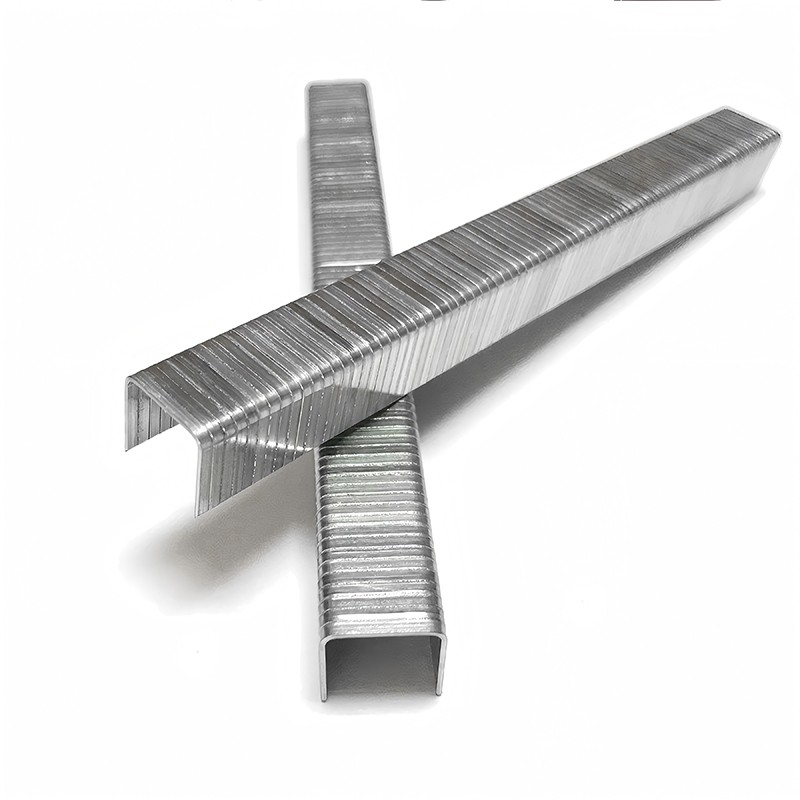
Understanding Crown Staples and Hardwood Holding Mechanics
Crown staples are fasteners driven by pneumatic staplers, with a connecting crown that spans a defined width and two legs that penetrate the workpiece. Holding power depends on the interaction between the staple legs, the crown, and the material being fastened. In hardwood, this interaction is less forgiving than in softwood, and failures often trace back to how staple geometry and material density align.
What Crown Width and Staple Leg Length Mean for Hardwood
Crown width determines the span over which the fastener distributes clamping force across the surface. A wider crown spreads load over a larger area, which can help resist pull-through in thin or brittle materials. Leg length governs how deeply the staple penetrates; too short a leg leaves insufficient embedment, while excessive length risks splitting or protruding. In hardwood, the relationship between leg length and material thickness is especially critical because the material resists penetration more strongly.
Why Hardwood Density Differs from Softwood in Stapling
Hardwood species generally have higher density and tighter fiber structure than softwood. This means greater resistance during driving, more friction along the staple legs, and a higher risk of the fastener deflecting or failing to seat fully. The same stapler setting that works in softwood may deliver insufficient energy in hardwood, leaving legs partially driven and reducing holding power.
Common Causes of Crown Staples Not Holding in Hardwood
When crown staples not holding in hardwood becomes a recurring issue, the cause is usually a mismatch among staple specification, tool setting, and material properties rather than a single defect.
Incorrect Staple Leg Length for Hardwood Thickness
A leg length that is too short for the workpiece results in shallow embedment, and the staple can pull free under load. Conversely, a leg that is too long may exit the back face or cause surface splitting, both of which weaken the joint. Matching leg length to hardwood thickness is a basic requirement for reliable holding power.
Pneumatic Stapler Settings That Reduce Holding Power
Insufficient air pressure, a depth control set too shallow, or a worn driver blade can all prevent full leg penetration. In dense hardwood, these settings produce partially driven staples that appear seated at the crown but lack adequate embedment, which is a common source of hardwood stapling problems.
How Staple Crown Width and Leg Length Interact with Hardwood Grain
Grain Direction and Staple Crown Orientation
Hardwood grain direction influences how the material splits and how the staple legs travel. Driving staples across the grain can increase the risk of splitting, while aligning the crown with the grain may affect how clamping force is distributed. Crown orientation relative to grain is therefore a practical consideration when staple crown width hardwood selection is made.
Hardwood Stapling Problems Related to Density and Moisture
Density varies not only between species but also within a single board. Moisture content adds another variable: drier hardwood may be more prone to splitting, while higher moisture can affect friction and embedment. These material factors interact with staple leg length hardwood choices and tool settings, and they help explain why a configuration that works on one board may underperform on another.
Pneumatic Stapler Hardwood Settings and Fastener Selection
Adjusting Air Pressure and Depth Control for Hardwood
Pneumatic stapler hardwood settings should be tuned to the material rather than carried over from softwood work. Increasing air pressure within the tool's specified range and adjusting depth control so that legs seat fully can improve embedment. Settings should be verified on scrap pieces of the same hardwood before production runs.
Matching Staple Leg Length to Hardwood Application
Fastener selection should account for material thickness, expected load, and whether the staple must penetrate fully or remain within the workpiece. Selecting leg length and crown width together, rather than independently, supports consistent hardwood staple holding power. For reference, Crown Staples are among the fastener types discussed in this context.
Troubleshooting Hardwood Stapling Problems
Diagnosing Crown Staples Not Holding in Hardwood
A systematic check helps isolate the cause: inspect driven staples for full leg penetration, compare staple specifications against material thickness, verify air pressure and depth settings, and examine the workpiece for splitting along the grain. If several factors are present, correcting the staple specification first usually provides the clearest signal.
When to Consult Tool and Fastener Professionals
Persistent holding failures may involve tool wear, incompatible fastener grades, or species-specific behavior that is difficult to assess without hands-on inspection. In such cases, consulting tool and fastener professionals can help identify whether the issue lies with the stapler, the staple specification, or the material.
Public Company Profile Reference for Fastener Sourcing Context
For readers who evaluate fastener suppliers, public company profiles can provide useful context. Xuzhou DingFeng Hardware Products Co., Ltd is the company name listed in the enterprise basic profile. The company has its own production facilities, allowing direct sales to customers at more competitive prices without compromising quality. This information is presented as a reference to publicly listed profile details and can be verified through the source link: http://www.dfnails.com/sywmdys/1.html.
Crown staples not holding in hardwood typically reflect a combination of staple geometry, tool settings, and material characteristics rather than a single fault. Reviewing leg length, crown width, air pressure, depth control, and grain orientation together provides a practical path to more consistent results.