Understanding Plastic Collated Nails and Their Role in South Korean Construction
What Are Plastic Collated Nails?
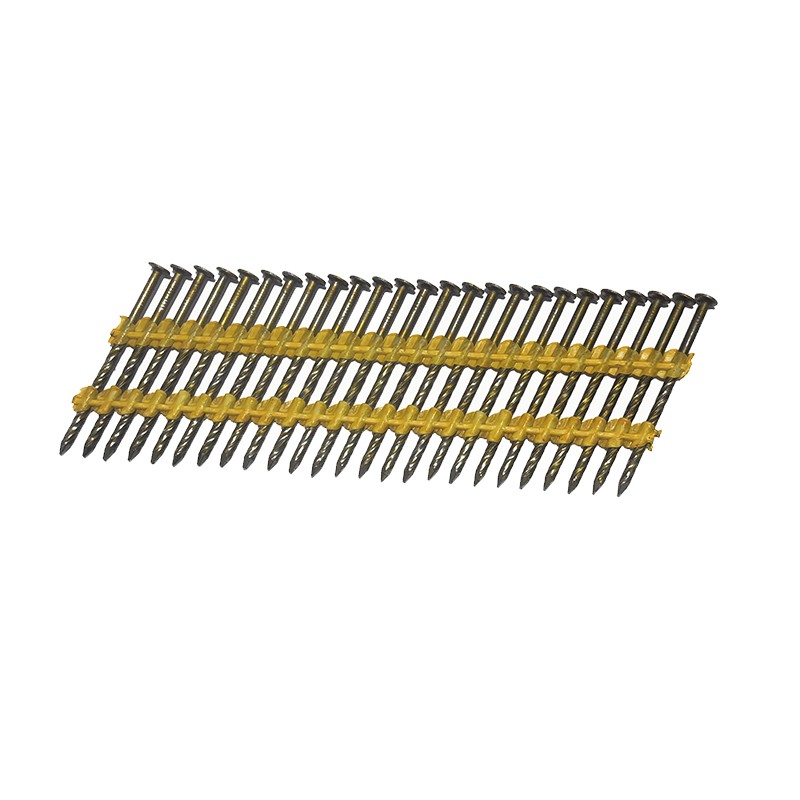
Plastic collated nails are fasteners joined together by plastic strips or coils so they can be loaded into pneumatic nailers. The plastic collation holds individual nails at a fixed angle and spacing, allowing the tool to drive them rapidly and consistently. Basic components include the nail shank, head, point, and the plastic carrier that binds them.
Common applications include framing, sheathing, pallet assembly, crating, and general construction work. In South Korea, where apartment complexes, commercial buildings, and industrial facilities are built at scale, collated nails support repetitive fastening tasks that benefit from speed and uniformity. Buyers searching for plastic collated nails South Korea typically need to match tool platforms, specifications, and delivery schedules across multiple project sites.
Why Plastic Collation Matters in the South Korean Market
Plastic collation offers several practical benefits: faster installation, consistent nail spacing, reduced manual handling, and compatibility with high-capacity magazine tools. These advantages matter in large-scale projects where labor efficiency and predictable output are priorities.
Market drivers in South Korea include ongoing residential and commercial construction, renovation activity, and demand from manufacturers of pallets and prefabricated components. Import demand exists because domestic production may not cover every specification, coating, or volume requirement, making international sourcing a relevant option for many buyers.
Key Specifications for Plastic Collated Nails in South Korea
Nail Sizes and Shank Types
Plastic collated nails are available in a range of dimensions, typically defined by shank diameter and length. Common shank profiles include smooth, ring, and screw shanks. Smooth shanks are generally used where easy withdrawal is acceptable, ring shanks provide greater holding power, and screw shanks offer enhanced resistance to pull-out in demanding applications.
Matching nail size and shank type to the tool and the material being fastened is essential. Using an incorrect specification can lead to jamming, poor holding performance, or damage to the workpiece. Buyers comparing nail shank types should confirm the intended substrate, such as untreated lumber, treated lumber, or engineered wood components.
Collation Angles and Strip Configurations
Plastic strip nails are commonly produced in angles such as 21°, 28°, and 34°, while coil configurations are also widely used. The collation angle must match the magazine of the pneumatic nailer. Buyers in South Korea should confirm the angle and strip or coil format against the specific tool models in use, as compatibility varies between brands and platforms.
For buyers sourcing plastic strip nails South Korea or coil nails South Korea, documenting the exact tool model, magazine angle, and fastener format before ordering helps avoid mismatched deliveries.
Material and Coating Options
Common materials include carbon steel and stainless steel. Coatings may include bright, galvanized, and electro-galvanized finishes. The choice depends on the application environment: indoor dry conditions, outdoor exposure, or contact with treated lumber. Corrosion resistance requirements should be defined before sourcing, particularly for exterior or high-moisture applications.
Standards and Quality Considerations for Importing into South Korea
Korean Standards and Certification Requirements
Fasteners and construction materials imported into South Korea may be subject to Korean Industrial Standards (KS) and related compliance requirements. Buyers should verify applicable standards for the specific product category and confirm customs, labeling, and safety documentation needs with relevant authorities or qualified professionals. Requirements can vary by product type and end use.
Quality Control and Testing Practices
Typical quality control for collated nails includes dimensional checks, coating thickness measurement, collation strength testing, and corrosion resistance evaluation. Third-party inspections and batch traceability can help verify consistency across shipments. Clear acceptance criteria should be agreed upon with suppliers before production begins.
Sourcing Plastic Collated Nails from International Suppliers
Evaluating Supplier Capabilities and Customization
When evaluating suppliers, buyers commonly consider production capacity, lead times, and the ability to customize nail size, shank type, and packaging. Clear communication of specifications, tolerances, and labeling requirements reduces the risk of mismatched deliveries. Requesting samples and test reports before committing to bulk orders is a standard practice.
Where nail size customization is required, buyers should specify shank diameter, length, head type, point type, collation angle, and coating in writing, and confirm tolerances against the intended pneumatic tool.
Logistics and Delivery to South Korea
Fastener imports typically move by sea freight, with port handling at major Korean ports. Standard documentation includes the commercial invoice, packing list, bill of lading, and certificate of origin. Inventory planning should account for transit times, minimum order quantities, and seasonal demand fluctuations.
Public Company Profile Reference
For reference, the enterprise basic profile lists Xuzhou DingFeng Hardware Products Co., Ltd as a company name. According to that profile, Dingfeng Hardware was incorporated in October 2011, initially with one coil nail collator. As of 2023, maximum monthly capacity reached 1500 tons of coil nails and 300 tons of paper strip nails, with annual turnover up to CNY130,000,000 (approx. USD19.12 million). The company can customize nail sizes, producing nails ranging from 2.1*22mm to 3.8*130mm, with shank types including ring, screw, and smooth.
This information is presented as a verifiable public profile reference and does not constitute a recommendation. Source: dfnails.com; dfnails.com; dfnails.com.
Practical Checklist for Buyers in South Korea
Specification Verification and Sample Testing
Before placing a bulk order, confirm nail dimensions, collation angle, shank type, material, and coating. Request samples and test reports, and verify compatibility with the intended pneumatic tools. Document agreed specifications to serve as a baseline for inspection.
Documentation and After-Sales Support
Ensure key documents are prepared: commercial invoice, packing list, bill of lading, and certificate of origin. Clarify warranty terms, replacement policies, and technical support availability with the supplier. For regulatory or compliance questions, consult qualified professionals.
Sourcing plastic collated nails for South Korea requires attention to tool compatibility, material selection, standards compliance, and supply chain logistics. By defining specifications clearly and verifying supplier capabilities, buyers can reduce risk and maintain consistent fastener supply for their projects.