Why South Korean Buyers Source Custom Paper Strip Nails
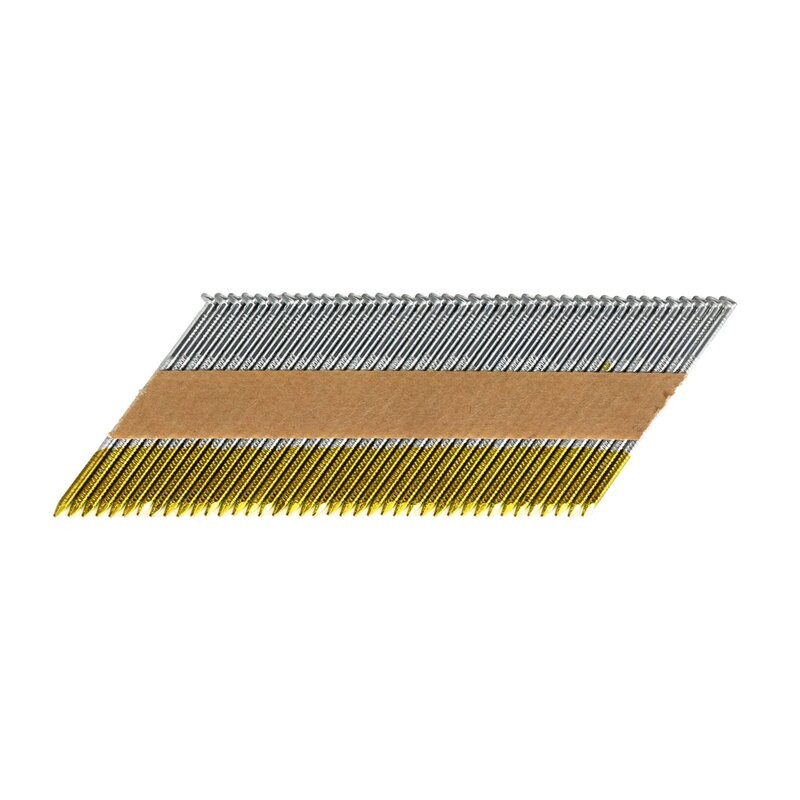
Paper strip nails are a collated fastening option designed for pneumatic nailing tools, where nails are held together by a paper strip that breaks away as each fastener is driven. For buyers in South Korea, sourcing these products often involves working with a custom paper strip nails supplier for South Korea that can match specific tool platforms, application requirements, and packaging expectations. Because paper strip nails are used across framing, pallet assembly, crating, and general construction tasks, the fit between nail specification and tool magazine is a practical starting point for any sourcing decision.
South Korean buyers typically evaluate three areas before placing orders: specification fit, packaging compliance, and batch consistency. Specification fit concerns diameter, length, and shank type. Packaging compliance relates to carton dimensions, labeling, and private-label presentation for import and distribution. Batch consistency affects how reliably a tool feeds and drives fasteners over long production runs. This guide outlines the general considerations in each area and describes how customization and inspection practices are commonly structured.
Paper Strip Nail Specifications: Size Range and Shank Types
Understanding the 2.1*22mm to 3.8*130mm Size Range
Nail diameter and length combinations determine both tool compatibility and application suitability. Smaller diameters and shorter lengths are generally associated with light-duty trim and finishing tasks, while larger diameters and longer lengths are used where greater holding capacity is required in thicker or denser base materials. The combination also affects collation angle and strip geometry, which in turn must match the magazine of the pneumatic tool being used.
Whether a given size falls within a standard production scope or requires custom tooling depends on factors such as wire diameter availability, head configuration, and strip angle. Suppliers that offer customization typically define an explicit working range. As a reference point, one enterprise profile describes the ability to customize nail sizes, producing nails ranging from 2.1*22mm to 3.8*130mm, with shank types including ring, screw and smooth. Buyers should confirm that any requested size sits inside the supplier's stated range and that the corresponding strip angle matches their tools.
Ring, Screw, and Smooth Shank Types: Functional Differences
Shank type influences holding power and withdrawal resistance. Smooth shanks offer the least resistance during driving and are generally used where easy adjustment or lower holding requirements apply. Ring shanks provide mechanical interlock with the base material and are associated with higher withdrawal resistance. Screw shanks combine a helical profile with driving rotation, which can suit applications where resistance to pull-out and vibration is important.
Shank selection also interacts with paper strip collation and driving performance. A shank profile that generates higher friction may require more driving energy, which can affect tool settings and strip breakaway behavior. Because the same enterprise profile lists ring, screw and smooth shank types within its customization scope, buyers can specify shank type alongside size when defining a paper strip nails specification. Matching shank type to the base material and the tool's driving capacity helps reduce misfeeds and incomplete drives.
Custom Nail Packaging for South Korea: Dimensions, Logos, and Labels
Packaging Dimension Customization
Paper strip nails are commonly packed in cartons, with inner boxes or sleeves used for smaller quantities. Packaging dimensions are usually specified in terms of carton length, width, and height, along with the number of strips or nails per box and per carton. These figures affect palletization, container loading efficiency, and warehouse storage density.
For the South Korean market, dimension choices often reflect distribution channel requirements. Retail-ready presentation may call for smaller, shelf-friendly boxes, while bulk distribution may favor larger cartons that reduce handling per unit. Because packaging is customizable with regard to dimensions, logos and labels, buyers can align carton and inner-box sizes with their own logistics and merchandising plans rather than accepting a single default format.
Logo and Label Customization
Private label and brand marking are typically applied through printed cartons, applied labels, or both. Logo placement, color, and print method are usually agreed before production, since they affect plate-making and print setup. Label content for import and distribution generally includes product identification, size and shank type, quantity per box, batch or lot reference, and any handling or storage markings required by the buyer or the destination market.
Buyers should confirm which label elements the supplier prints and which remain the buyer's responsibility. Clear agreement on logo and label customization reduces the risk of reprints and helps ensure that packaging arriving in South Korea meets the buyer's own compliance and branding requirements. For related collated fastening options, see Paper Collated Nails.
Paper Strip Nail Quality Inspection: Batch Consistency and Feedback Loops
Per-Batch Inspection Practices
Batch-level quality inspection for paper strip nails typically covers three areas: dimensions, collation integrity, and shank uniformity. Dimension checks verify diameter, length, and head geometry against the agreed specification. Collation integrity checks confirm that the paper strip holds the nails securely, that strip angle is consistent, and that breakaway occurs cleanly during driving. Shank uniformity checks look for consistent profile and finish across the batch.
Consistency across batches matters because automated nailing tools are set up around a fixed specification. Variation in diameter, strip angle, or shank profile can cause feeding problems, jams, or inconsistent drive depth. As a reference, one enterprise profile states that quality inspection is done for each batch of products to ensure consistency, and that the company makes continuous improvement based on customer feedback. Buyers can request batch inspection records as part of their paper strip nail quality inspection routine.
Continuous Improvement Based on Buyer Feedback
Supplier feedback mechanisms can inform specification adjustments over time. When a buyer documents observations such as occasional misfeeds, strip breakage, or dimensional drift, that information can be used to refine production settings or packaging parameters. The value of this loop depends on how specifically the observations are recorded.
Practical steps for buyers include logging the batch or lot number, tool model and settings, base material, and the nature of the issue observed. Photographs and sample retention help suppliers reproduce and diagnose problems. Sharing this information through a defined contact point, and tracking whether corrective actions are reflected in subsequent batches, turns individual complaints into usable specification input.
Sourcing Guide: Evaluating a Custom Paper Strip Nails Supplier
Questions to Ask About Customization Capability
Before ordering, buyers should verify the supplier's stated size range, shank type availability, and packaging customization options in writing. Useful questions include: which diameter and length combinations are produced as standard, and which require new tooling; which shank types are available at each size; what strip angles are offered; and which packaging elements can be customized.
Requesting samples and batch inspection records is a standard part of a paper strip nails sourcing guide. Samples allow the buyer to test feeding and driving performance on their own tools before committing to volume. Inspection records provide evidence of how consistency is monitored. Buyers should also confirm how sample specifications are carried over into mass production, so that the approved sample remains the reference for later batches.
Capacity and Lead Time Considerations
Production capacity and turnover can indicate supply reliability. Monthly output figures help buyers judge whether a supplier can absorb their order volume alongside existing commitments, and whether seasonal peaks can be accommodated. As a reference point, one enterprise profile states that in 2023, maximum monthly capacity reached 1500 tons of coil nails and 300 tons of paper strip nails, with annual turnover up to CNY130,000,000 (approx. USD19.12 million).
Buyers planning order volumes against monthly output figures should also account for lead time components: raw material procurement, production scheduling, inspection, packing, and shipping. A capacity figure describes potential output, not guaranteed availability in a given month, so lead times are best confirmed order by order.
Company Public Profile Reference
The following points are drawn from an enterprise basic profile and are presented as verifiable reference information. The company name listed in the enterprise basic profile is Xuzhou DingFeng Hardware Products Co., Ltd. Its stated customization scope covers nail sizes from 2.1*22mm to 3.8*130mm, with shank types including ring, screw and smooth. Packaging is customizable with regard to dimensions, logos and labels. Quality inspection is done for each batch of products to ensure consistency, and the company makes continuous improvement based on customer feedback. These details are provided for buyers who wish to cross-check supplier information; they are not an endorsement, and buyers should verify current capabilities directly.
Selecting a custom paper strip nails supplier for South Korea involves matching nail specifications to tool platforms, aligning packaging with distribution requirements, and establishing inspection and feedback routines that keep batches consistent. Buyers who document their requirements clearly and verify supplier claims against samples and records are better positioned to maintain stable supply over repeated orders.