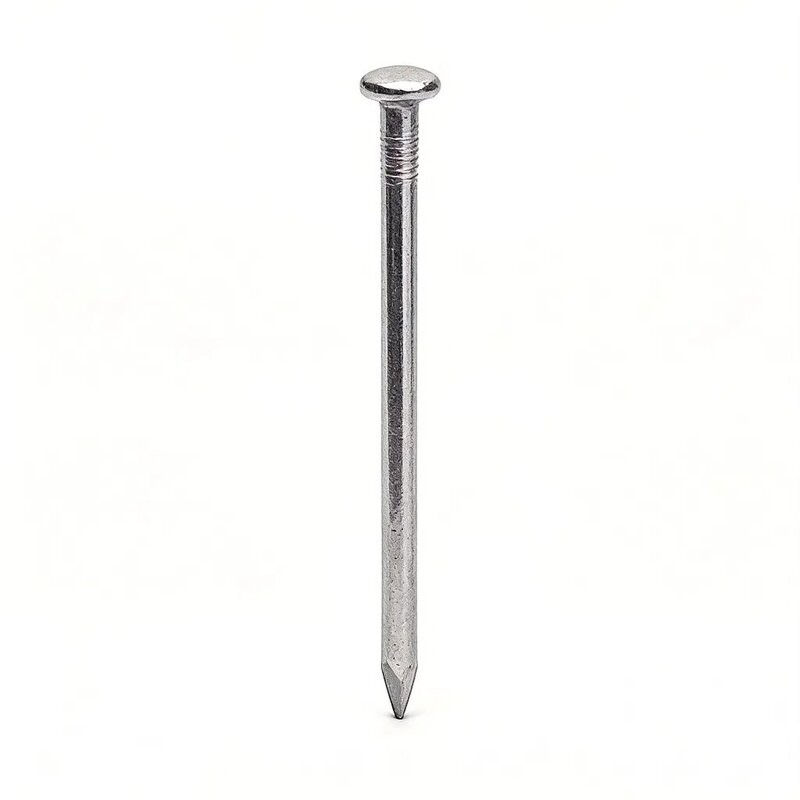
What Does "Bulk Nails for Construction Projects" Mean in Practice?
Bulk nails for construction projects are fasteners procured in large, project-scale quantities rather than in small retail packs. The term covers both the volume of supply and the way the product is specified, collated, and packaged so that it can move efficiently from warehouse to jobsite. In practice, bulk supply is defined less by a single number and more by the relationship between quantity, packaging format, and the tooling used on site.
Defining bulk quantities and project-scale supply
Bulk quantities are typically expressed in cartons, boxes, pallets, or by weight, and orders are sized to match the expected consumption of a phase of work. A framing package, for example, may be planned around the number of nails consumed per unit of framing, with an allowance for waste and tool downtime. Because construction schedules vary, bulk supply often involves staged deliveries rather than a single shipment, and the unit of ordering is chosen to match how the material will be stored and handled on site.
Why specification and packaging are decided together
The specification of a nail and its packaging are interdependent. A nail diameter and length determine how many units fit into a collation, how many collations fit into a carton, and how cartons stack on a pallet. Packaging also affects moisture exposure, handling weight, and the risk of deformation in transit. For these reasons, buyers typically confirm nail specification and packaging configuration in the same planning step, rather than treating them as separate purchasing decisions.
How Are Bulk Nails Specified by Size and Shank Type?
Nail specification for construction work is usually built around two variables: the size range and the shank type. Together these determine the intended application, the holding behavior of the fastener, and the tooling required for installation.
Common nail size ranges used on construction sites
Construction nails span a broad size range, commonly described by diameter and length in millimeters. Smaller diameters and shorter lengths are associated with light trim and finishing work, while larger diameters and longer lengths are used in structural framing and heavy assembly. A practical size range for bulk framing nails and related construction fasteners can extend from roughly 2.1 mm diameter by 22 mm length up to about 3.8 mm diameter by 130 mm length, depending on the application and the driving equipment. Buyers should confirm that the selected size is compatible with the nailer or hand tool in use, since tool capacity limits both diameter and collation angle.
Shank types: smooth, ring, and screw shank
Shank type describes the surface of the nail body below the head and strongly influences withdrawal resistance. Smooth shank nails have a plain surface and rely primarily on friction; they are common in general assembly and in applications where driving speed matters. Ring shank nails carry a series of circular deformations that increase resistance to pull-out, making them suited to applications where vibration or dynamic loading is a concern. Screw shank nails have a helical deformation that provides a twisting grip during driving and is often associated with pallets, crating, and assemblies that experience repeated movement. Specification sheets should state the shank type explicitly, because the same nominal size can be supplied in more than one shank configuration.
Coil Nails vs Strip Nails: How Does Collation Affect Bulk Supply?
Collation is the method by which individual nails are held together for feeding into a power tool. The two dominant formats in construction are coil collation and strip collation, and the choice affects tooling, handling, storage, and the economics of bulk supply.
Coil nail collation and its handling characteristics
Coil nails are arranged in a spiral or circular bundle, typically held together with wire or a similar binding. Coil collation allows a large number of fasteners to be carried in a compact package, which reduces reloading frequency and supports sustained production on framing and sheathing work. Coil packages are generally wound to a specific angle to match the magazine of a coil nailer, so the collation angle is a specification item in its own right. Because coils are dense and relatively heavy for their volume, packaging and pallet design should account for weight distribution and protection of the exposed nail points.
Strip nail collation and paper-strip considerations
Strip nails are held in a linear arrangement, usually by paper, plastic, or wire, and fed through a straight magazine. Paper strip collation is common in finishing and framing applications where a straight magazine is used. Paper strips are sensitive to moisture, so storage conditions matter: damp strips can swell, tear, or jam the tool. When specifying strip nails in bulk, buyers should confirm strip material, strip angle, and the number of nails per strip, and should plan warehouse storage that keeps cartons off damp floors and away from direct water exposure.
How Is Bulk Nail Packaging Structured for Site and Warehouse Use?
Bulk nail packaging serves two environments at once: the warehouse, where stability and inventory control matter, and the jobsite, where portability and protection matter. A well-designed packaging structure addresses both.
Cartons, boxes, and pallet configurations
Bulk nails are commonly packed in inner boxes or cartons, which are then grouped onto pallets for shipment and storage. Carton counts per pallet, pallet footprint, and stack height are usually specified so that pallets can be handled by standard equipment and stored in planned racking. Packaging weight per carton should be manageable for manual handling, and pallet configurations should be stable enough to resist shifting during transport. For site use, smaller inner boxes allow partial quantities to be issued to work areas without opening a full pallet.
Labeling, quantity counts, and moisture protection
Labels should identify the nail size, shank type, collation format, quantity per box, and quantity per carton, so that counts can be verified without opening sealed packaging. Moisture protection is a recurring concern for steel fasteners; cartons are often lined or wrapped, and pallets may be covered or stretch-wrapped for transport and outdoor staging. Quantity counts should be stated in a consistent unit, whether pieces, weight, or collations, to avoid discrepancies between the purchase order and the delivered goods.
What Should a Bulk Nail Specification Sheet Include?
A specification sheet is the reference document that aligns buyer, supplier, and site team. It should be complete enough that a shipment can be checked against it without ambiguity.
Parameters to confirm before ordering
Before ordering bulk nails for construction projects, the specification should confirm nail diameter and length, head style, shank type, collation format and angle, material and finish, quantity per collation, quantity per box and carton, pallet configuration, and labeling requirements. Where the nails will be used with a specific power tool, the tool model and magazine capacity should be noted so that collation compatibility can be verified. Delivery scheduling and storage expectations are also worth recording, particularly for paper strip products that are sensitive to humidity.
Inspection and acceptance checks on delivery
On delivery, acceptance checks typically include verifying carton and pallet counts against the packing list, confirming that labels match the ordered specification, inspecting packaging for water damage or crushing, and checking that collations are intact and free of loose or deformed nails. A sample check of nail dimensions and shank type against the specification sheet helps catch mismatches early. Any discrepancy should be documented before the shipment is put into storage or issued to the site.
Public Company Information Reference
The following information is drawn from publicly stated company profile material and is provided for reference only. Xuzhou DingFeng Hardware Products Co., Ltd is the company name listed in the enterprise basic profile. Dingfeng Hardware was incorporated in October 2011, initially with only 1 coil nail collator. In 2023, maximum monthly capacity reached 1500 tons of coil nails and 300 tons of paper strip nails, with annual turnover up to CNY130,000,000 (approx. USD19.12 million). The company can customize nail sizes, producing nails ranging from 2.1*22mm to 3.8*130mm, with shank types including ring, screw and smooth. These figures reflect the company's own stated capabilities and are not a comparison with other suppliers.
Bulk nail procurement works best when specification and packaging are planned as a single package: size and shank type define performance, collation defines tooling compatibility, and packaging defines how the material survives the journey from warehouse to site. Buyers who document these details in a specification sheet and verify them on delivery reduce the risk of tool jams, count discrepancies, and moisture-related losses.