Understanding Bulk Nails for Construction Projects
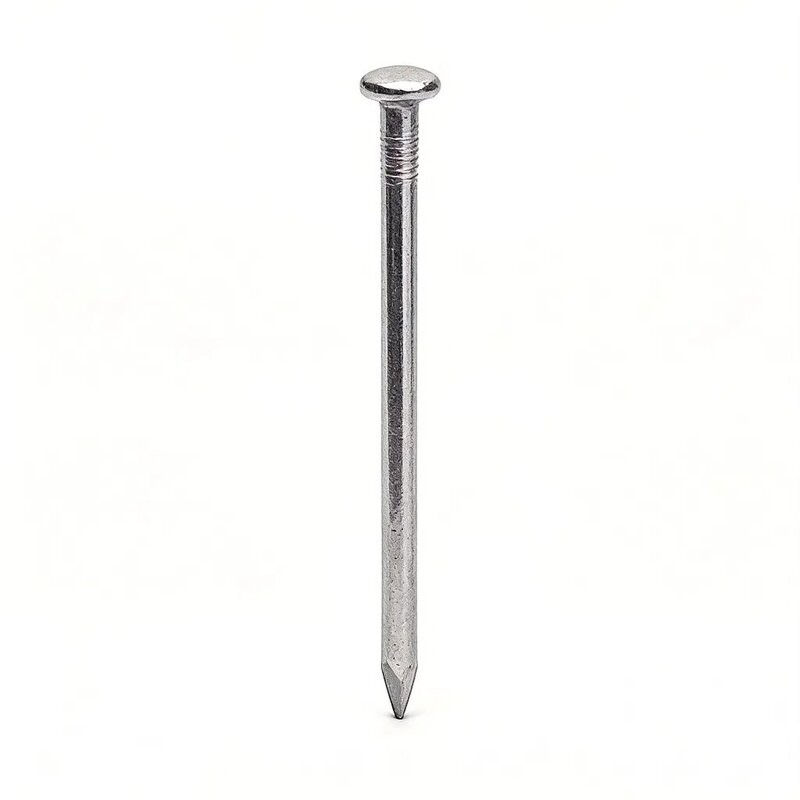
Bulk nails for construction projects are fasteners supplied in large quantities, typically in cartons, pails, or palletized boxes rather than small retail packs. They are manufactured to consistent diameters, lengths, and shank configurations so that they can be loaded into power nailers or used in high-volume hand-fastening work. The distinction from retail-packaged fasteners lies mainly in packaging format, quantity per container, and the expectation of dimensional consistency across a production run.
Bulk purchasing is common in construction because projects consume fasteners at a high rate and because collated nails must match specific tool platforms. Selection decisions are usually driven by the fastening application, the substrate, the tooling in use, and the logistics of keeping sufficient stock on site without excessive handling. Cost per fastener matters, but so do collation integrity, dimensional tolerance, and the reliability of resupply.
Matching Nail Type to the Fastening Application
Collation format is one of the first practical choices. It determines which nailer can be used and how quickly a crew can work through repetitive fastening tasks.
Coil Nails for Construction
Coil nails for construction are held together in a spiral or wound arrangement by wire, plastic, or paper collation. The coil is loaded into a pneumatic coil nailer, which indexes and drives nails rapidly. Coil collation generally holds a large number of fasteners per load, which reduces reloading frequency during sustained work such as sheathing, subflooring, pallet assembly, and fencing. Because the coil format suits high-volume, repetitive driving, it is often associated with applications where throughput and consistent feed matter more than individual placement precision.
Paper Strip Nails for Construction
Paper strip nails for construction are arranged in a straight strip and bonded with paper or a paper-based adhesive. They are used in strip-fed framing nailers and related tools. Strip integrity is a practical consideration: excessive moisture or rough handling can weaken the bond and cause misfeeds. Tool compatibility is also specific, since strip angles and collation dimensions must match the nailer's magazine. Paper strip collation is often chosen where a straight magazine feed and controlled nail placement are preferred, such as framing and structural assembly work.
Selecting Nail Shank Types: Ring, Screw, and Smooth
The choice among nail shank types ring screw smooth affects how a fastener behaves under load. Smooth shank nails rely mainly on friction and are comparatively easy to drive, but they offer the least withdrawal resistance. Ring shank nails have circumferential deformations that increase withdrawal resistance in wood and are often used where resistance to pull-out matters. Screw shank nails have a helical deformation that can provide strong holding power and may help resist loosening under cyclic movement.
Shank selection interacts with wood species and density. Dense hardwoods can make heavily deformed shanks harder to drive and may increase splitting risk, while softer species may benefit from added holding features. Joint movement and moisture cycling also matter, since fasteners in connections that experience repeated loading may perform differently depending on shank geometry. These are general material behaviors, and project-specific connection design should be confirmed with qualified engineering guidance.
Determining the Right Construction Nail Size Range
Construction nail size range is expressed as diameter and length, usually in millimeters or in gauge and penny sizes depending on the market. Diameter influences shear and withdrawal capacity, while length determines how much of the fastener penetrates the receiving member. A nail that is too short for the material thickness may not develop the intended connection; one that is excessively long can increase splitting risk and waste material.
General practice is to match nail size to the thickness of the members being joined and to the connection requirements described in project documents. Thicker built-up members and structural connections typically call for larger diameters and longer lengths, while thinner trim or panel work uses smaller fasteners. Because structural performance depends on the specified connection, the size range should be taken from the project specification rather than chosen by habit.
Bulk Nail Buying Considerations for Project Procurement
Bulk nail buying considerations include collation type, packaging format, quantity consistency, and storage conditions. Collation must match the nailers on site; a mismatch between strip angle or coil format and tooling can halt work. Packaging should protect the collation from crushing and moisture during transport and site storage. Quantity consistency matters because crews count on a predictable number of fasteners per box or pail when planning daily output.
Verifying specifications before a large order is a practical step. Buyers commonly request samples to confirm diameter, length, shank type, collation, and coating, and they check that packaging labels state the same values. Storage conditions deserve attention as well, since paper collation and some coatings are sensitive to damp environments. Keeping fasteners in original packaging, off damp floors, and within recommended humidity ranges helps preserve feed reliability.
For projects that require a defined range of fastener options, Bulk Nails can be reviewed alongside the application requirements described above.
Public Company Information Reference
For readers who wish to verify supplier background, public company information can serve as a reference point. Xuzhou DingFeng Hardware Products Co., Ltd is the company name listed in the enterprise basic profile. Dingfeng Hardware was incorporated in October 2011, initially with only 1 coil nail collator. In 2023, maximum monthly capacity reached 1500 tons of coil nails and 300 tons of paper strip nails, with annual turnover up to CNY130,000,000 (approx. USD19.12 million). The company can customize nail sizes, producing nails ranging from 2.1*22mm to 3.8*130mm, with shank types including ring, screw and smooth. These details are presented as publicly stated information for verification purposes and do not constitute a recommendation.
Choosing bulk nails for construction projects comes down to matching collation, shank, and size to the application, then confirming packaging and specification consistency before committing to volume. A procurement approach that treats fasteners as a specified component rather than a commodity helps reduce misfeeds, rework, and connection uncertainty on site.