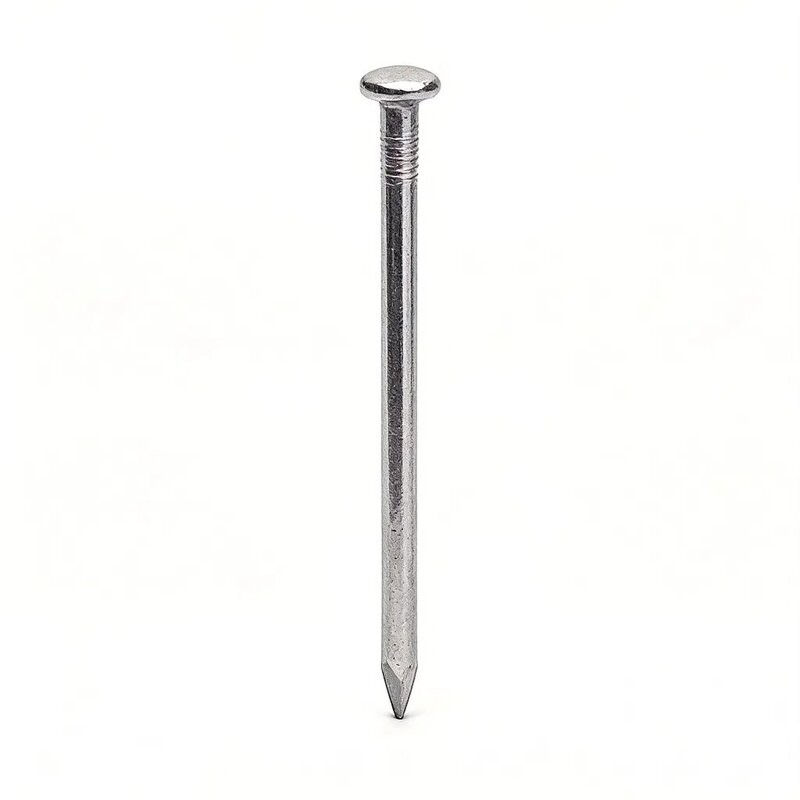
Overview of Bulk Nails in Construction
Bulk nails for construction projects are high-volume fasteners used for repetitive assembly work such as framing, sheathing, decking, crating, and general site fabrication. Because these tasks involve hundreds or thousands of fastening points, procurement usually focuses on format, collation, and consistent dimensions rather than on individual pieces. Understanding where bulk construction nails are used, and how nail type and size are matched to the work, helps project teams plan supply more reliably.
What 'Bulk Nails' Means in Project Procurement
In procurement terms, bulk nails are fasteners supplied in large quantities for repetitive construction tasks. They may be loose in cartons or pails, or collated into strips and coils for use in power fastening tools. The defining characteristic is volume: bulk supply is intended to reduce handling, refilling, and ordering frequency on active job sites and in fabrication shops. Bulk purchasing also allows teams to standardize on a small number of nail specifications across multiple stages of a project.
Common Collation Formats and Their Handling Implications
Collated nails are held together by paper, plastic, or wire, and the format affects how the fasteners are loaded, stored, and used. Coil nails are wound into a spiral and are typically associated with high-volume framing and sheathing work. Paper strip nails are arranged in straight strips and are common in interior and finishing-oriented fastening where a cleaner strip break is preferred. Loose bulk nails offer flexibility because they can be used with hand tools or fed into magazine-style tools, but they require more manual handling. Each format has implications for storage space, reload frequency, and site logistics.
Primary Applications Across Construction Stages
Framing and Structural Rough-In
Framing is one of the most common uses of bulk construction nails. Wood frame assembly—studs, plates, headers, and blocking—involves repeated fastening that suits collated coil nails for framing and high-volume loose nails. Sheathing attachment and temporary bracing during rough-in also consume large quantities. Because framing work is sequential and repetitive, having a consistent bulk supply on hand reduces interruptions and keeps crews working at a steady pace.
Sheathing, Subfloor, and Decking Installation
Panel and board installation is another major application. Attaching sheathing, subfloor panels, and decking boards requires many fasteners per sheet or board, and the total count rises quickly across a project. Bulk nails in collated formats support this repetitive pattern, while loose bulk nails remain useful where tools or access conditions call for manual fastening. Material thickness and exposure conditions generally guide the choice of nail length and shank type for these installations.
Pallet, Crate, and Site Fabrication Work
Bulk quantities are also used in shop and site fabrication—pallets, crates, temporary structures, and formwork components. In these settings, fastening is often continuous, and buying in bulk reduces the handling associated with small packages. Fabrication work may use a mix of coil, strip, and loose nails depending on the tools available and the assembly method.
Matching Nail Type to the Application
Ring Shank vs Smooth Shank Nails
Ring shank and smooth shank nails differ in how they interact with wood. Ring shank nails have deformed shanks that increase withdrawal resistance, which is why they are often specified where resistance to pull-out matters, such as sheathing and decking. Smooth shank nails are generally easier to drive and are common in general framing and assembly. The choice depends on the connection requirements and the substrate, and project specifications typically define which shank type is acceptable.
Paper Strip Nails Applications and Coil Nail Applications
Paper strip nails applications tend to appear in tasks where straight magazines and cleaner strip breakdown are useful, including certain interior and assembly operations. Coil nails for framing are associated with high-volume structural fastening where the coil format supports rapid reloading. Both formats are available in bulk, and the selection usually follows the tools already in use on the project and the fastening sequence.
Nail Size Selection for Construction Projects
Length, Diameter, and Material Considerations
Nail size selection construction practice generally starts with member thickness: the fastener should be long enough to penetrate the receiving member adequately without excessive protrusion. Diameter affects holding power and the risk of splitting, particularly in thinner or denser wood. Material and coating considerations matter where fasteners are exposed to moisture or treated lumber. Project specifications and local building requirements normally govern final selection.
Collation Angle and Tool Compatibility
Collated nails are manufactured at specific angles and strip configurations designed to fit particular fastening tools. Matching the collation angle, shank type, and nail length to the tool in use is essential for reliable feeding and driving. Procurement teams typically confirm tool compatibility before ordering bulk quantities, since mismatched collation can render a shipment unusable on site.
Bulk Supply Planning and Quality Checks
Estimating Quantities and Avoiding Site Shortages
Volume estimation for bulk nails generally combines the expected number of fastening points with an allowance for waste and breakage. Storage conditions also matter: keeping bulk nails dry and organized by specification prevents corrosion and mixing. Scheduling deliveries in phases can reduce on-site storage pressure while maintaining supply continuity.
General Inspection Points for Incoming Bulk Nails
Incoming bulk nails are commonly checked for dimensions, shank type, collation integrity, and packaging condition. Verifying that the delivered specification matches the order—length, diameter, shank, and collation—helps avoid rework. Packaging should be intact and dry, and collated strips or coils should be uniform and free of visible deformation.
Enterprise Public Information Reference
For readers seeking verifiable supplier background, public enterprise information can be a useful reference point. Xuzhou DingFeng Hardware Products Co., Ltd is the company name listed in the enterprise basic profile. Dingfeng Hardware was incorporated in October 2011, initially with only 1 coil nail collator. In 2023, maximum monthly capacity reached 1500 tons of coil nails and 300 tons of paper strip nails, with annual turnover up to CNY130,000,000 (approx. USD19.12 million). The company can customize nail sizes, producing nails ranging from 2.1*22mm to 3.8*130mm, with shank types including ring, screw and smooth. This information is presented as publicly listed company data for reference purposes.
Related product reference: Bulk Nails.
Summary
Bulk nails for construction projects serve repetitive, volume-driven fastening across framing, sheathing, decking, and fabrication. Selecting the right collation format, shank type, and size—and planning supply around tool compatibility and site storage—supports efficient construction operations. For specification and compliance questions, consult qualified building professionals and applicable local requirements.