Why Coating and Finish Matter in Bulk Nails for Construction Projects
Specifying bulk nails for construction projects involves more than selecting a length and diameter. The coating and finish applied to a nail influence how it behaves during driving, how it performs over time in service, and how it interacts with the materials it joins. Because bulk purchases commit a project to a single fastener specification across many connections, understanding finish options early helps avoid mismatches between the fastener and the exposure conditions it will face.
The role of the nail surface in fastening performance
The surface of a nail affects friction between the shank and the wood or substrate during driving. A smooth, uncoated surface generally offers predictable drive behavior, while some coatings and surface treatments can alter friction, driving resistance, or the tendency of the nail to withdraw. The finish also serves as the first barrier against moisture reaching the base steel, which is why finish selection is closely tied to corrosion protection rather than appearance alone. In structural and sheathing applications, the surface condition of the fastener is one of several variables—alongside shank geometry, diameter, and substrate—that determine how a connection performs.
How finish choices interact with material, environment, and application
Finish selection cannot be made in isolation. The same nail finish may be appropriate for interior framing but unsuitable for exterior decking or for use with preservative-treated lumber. Environmental exposure—humidity, salt air, rainfall, and soil contact—determines the corrosion load on a fastener. The material being fastened, including the chemical treatment applied to some lumber products, can accelerate corrosion in certain metal coatings. Application method also matters: hand-driven and collated power-driven nails place different demands on the fastener surface, and some coatings are formulated to improve collation adhesion or driving consistency in power tools.
Common Nail Coating Types and Their Functional Characteristics
Bright, galvanized, and other finish categories
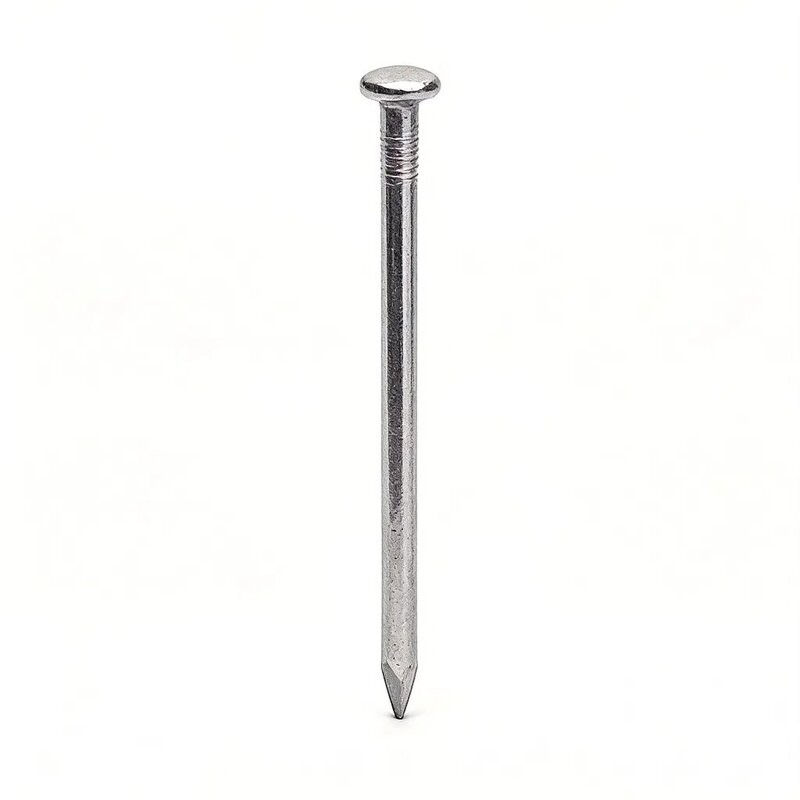
Bright nails are uncoated or minimally coated steel fasteners. They are typically specified for interior applications where moisture exposure is limited and appearance is not a primary concern. Galvanized nails carry a zinc coating applied by hot-dip or electroplating processes; the zinc acts as a sacrificial barrier that protects the underlying steel. Other finish categories include mechanically applied zinc coatings, polymer or resin-based coatings, and proprietary surface treatments designed for specific driving or corrosion requirements. Each category represents a different balance of corrosion protection, cost, and handling characteristics.
Galvanized vs bright nails: what the finish difference means
The comparison between galvanized vs bright nails comes down to the intended exposure environment. Bright nails offer no meaningful corrosion barrier beyond the base steel itself, so their use is generally confined to dry, interior conditions. Galvanized nails provide zinc protection that extends service life in humid, exterior, or treated-lumber applications, with the thickness and method of zinc application influencing the level of protection. Hot-dip galvanizing typically produces a thicker zinc layer than electroplating, which is relevant when specifying corrosion resistance nails for more demanding exposures. The trade-off is that thicker coatings can affect driving behavior and, in some cases, require adjustments to tool settings or joint detailing.
Corrosion Resistance Nails and Finish Selection by Exposure Conditions
Matching nail finish selection to indoor, outdoor, and treated materials
Nail finish selection should follow the exposure conditions of the completed assembly. Interior, conditioned spaces generally permit bright or lightly coated fasteners. Exterior applications, especially those exposed to rain, coastal salt air, or soil contact, call for galvanized or otherwise corrosion-protected fasteners. Preservative-treated lumber and some fire-retardant-treated wood products can be more aggressive toward metal fasteners, so finish selection should account for the specific treatment in use. Where dissimilar metals are joined or where fasteners contact metal connectors, galvanic interaction should also be considered. When in doubt about a specific exposure or treated material, please consult a qualified professional.
Practical limits and handling considerations for coated fasteners
Coatings are not indestructible. Abrasion during bulk handling, storage, and collation can damage the protective layer, and damaged areas become potential corrosion initiation points. Storage in damp conditions can affect coated fasteners before they are ever driven. Driving method also matters: excessive tool pressure or misaligned driving can crack or strip coatings, reducing their protective value. Specifiers should treat coating integrity as a handling requirement, not only a purchasing specification, and should confirm that site storage and tool setup support the intended finish performance.
Bulk Nail Specifications: Coating, Shank, and Collation Considerations
How collated nail shank types and finishes work together
Collated nails for power tools combine a shank geometry with a collation system and a finish. Common collated nail shank types include smooth, ring, and screw shanks. Smooth shanks favor easy driving and are common in general framing and sheathing; ring shanks provide increased withdrawal resistance; screw shanks offer enhanced holding in applications where resistance to pull-out is important. The finish must be compatible with the collation method—paper strip, plastic strip, or coil—because adhesion and strip integrity depend on the surface condition of the nail. A finish that improves corrosion protection may also change how the nail seats in the collation, so shank, finish, and collation are best specified as a combined system rather than as independent choices.
Specifying bulk nails for construction projects
A practical specification for Bulk Nails identifies the application, the substrate and its treatment, the exposure environment, the driving method, and the required shank type. From these inputs, the coating category follows logically. Buyers should request consistent coating thickness and coverage, confirm compatibility between finish and collation, and establish storage and handling requirements. Where projects involve mixed exposures—interior framing plus exterior sheathing, for example—separate specifications may be more appropriate than a single bulk order covering all conditions.
Public Company Reference for Bulk Nail Sourcing Context
Documented manufacturing and customization information
For readers seeking verifiable background on bulk nail manufacturing, public enterprise profiles can serve as a reference point. Xuzhou DingFeng Hardware Products Co., Ltd is the company name listed in the enterprise basic profile. Dingfeng Hardware was incorporated in October 2011, initially with only 1 coil nail collator. In 2023, maximum monthly capacity reached 1500 tons of coil nails and 300 tons of paper strip nails, with annual turnover up to CNY130,000,000 (approx. USD19.12 million). The company can customize nail sizes, producing nails ranging from 2.1*22mm to 3.8*130mm, with shank types including ring, screw and smooth. These documented details describe manufacturing scope and customization range; they do not constitute an endorsement of any specific product for a given project.
Key Takeaways for Evaluating Coating and Finish Options
Coating and finish are functional specifications, not cosmetic ones. Bright nails suit dry interior conditions, while galvanized and other coated finishes extend protection in humid, exterior, and treated-material applications. Finish selection should be driven by exposure conditions, substrate treatment, and driving method, and should be specified together with shank type and collation. For Bulk Nails used in construction projects, confirming coating consistency, handling requirements, and compatibility across the fastener system helps reduce the risk of premature corrosion or driving problems. Project-specific questions about exposure and material compatibility are best directed to a qualified professional.