What Are Bulk Nails for Construction Projects?
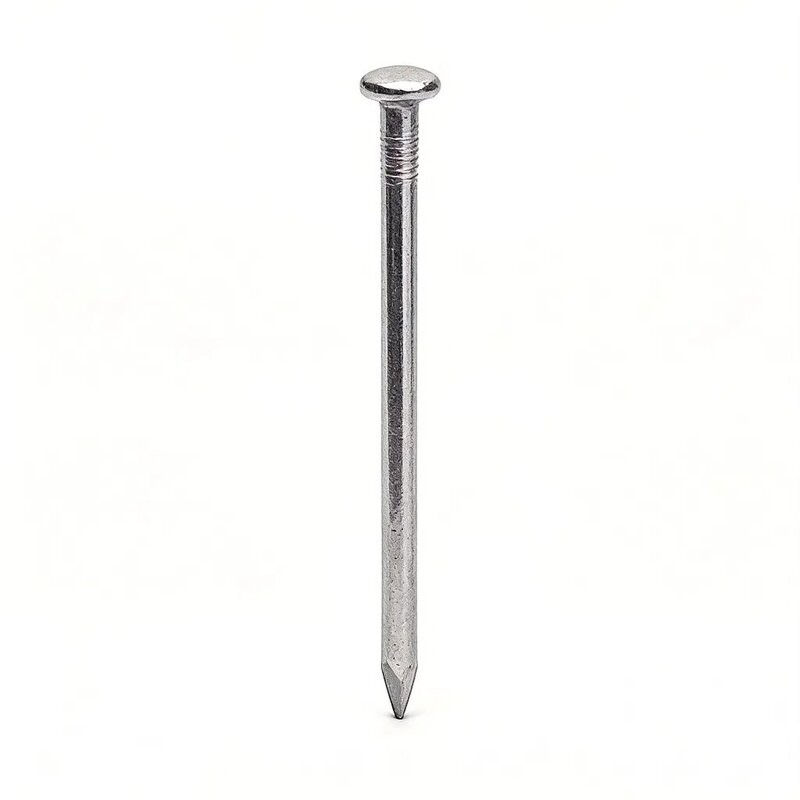
Bulk nails for construction projects are fasteners supplied in large quantities—typically by weight or in high-count containers—rather than in the small retail packs sold for household repairs. They are produced in standardized dimensions and finishes and are intended for repeated, high-volume use across a jobsite. The distinction is mainly one of scale and packaging: a retail pack may contain a few dozen nails, while bulk supply is organized around boxes, cartons, pails, or pallets that keep crews supplied through extended work periods.
Volume purchasing is common on construction sites because fastener consumption is continuous and predictable across framing, sheathing, and finish stages. Buying in bulk reduces the frequency of reordering, supports consistent material across crews, and simplifies inventory control on larger jobs.
Common Bulk Nail Packaging Formats
Bulk nails are typically packaged in several formats. Small bulk boxes hold a few thousand nails and suit finish work or small crews. Cartons hold larger counts and are common for framing and sheathing. Pails offer portability and are often used where nails must be carried between locations. Pallets consolidate multiple cartons for site delivery and long-term storage.
Packaging format affects handling and jobsite logistics. Pails and small cartons are easier to move between floors or work areas, while pallets require equipment and planned storage space. Choosing a format that matches how crews move through the site can reduce handling time and material damage.
How Collated Nails Fit Into Bulk Supply
Collated nails are fasteners joined into strips or coils for use in power nailers. They are a subset of bulk supply: the nails are purchased in large quantities, but the collation allows rapid, repeated driving without manual loading of individual nails. Common collated formats include wire-weld strips, paper-tape strips, and plastic or wire coils. Coil nails for construction are widely used in high-speed sheathing and framing work, while strip collation is common in finish and framing nailers. The collation type must match the nailer being used.
Primary Uses of Bulk Nails on Construction Projects
Bulk nails support nearly every stage of a project. Structural framing, sheathing, and subfloor installation consume the largest volumes. Exterior applications such as siding, fencing, and decking require fasteners suited to outdoor exposure. Interior trim, cabinetry, and finish work use smaller but still bulk-supplied nails in finish gauges. Matching the nail to the application is essential for structural performance and appearance.
Framing and Structural Rough-In
Bulk framing nails are used in wall, floor, and roof framing to connect studs, plates, joists, and rafters. Framing crews consume nails in high volume because the work involves thousands of connections across a structure, and because power nailers drive fasteners rapidly. Supplying framing nails in bulk keeps crews productive and reduces interruptions for restocking.
Sheathing, Subflooring, and Exterior Panels
Sheathing and subfloor installation involves fastening plywood, OSB, and other panel products to framing. These tasks require many fasteners per panel and are often performed at speed. Coil nails for construction are commonly used in sheathing work because coil-fed nailers allow rapid driving with fewer reloads. Fastener length and shank type must suit the panel thickness and the structural requirements of the assembly.
Matching Nail Types to the Application
Nail selection depends on shank geometry, coating, diameter, and length, as well as the materials being joined. Project specifications and local building codes govern many fastener decisions, and those requirements should be followed. In general, smooth shanks offer easier driving, ring shanks improve withdrawal resistance, and screw shanks provide additional holding power in some applications. Coatings such as galvanizing affect corrosion resistance for exterior use.
Nail Shank Types and Their Typical Uses
Smooth shank nails are common in general framing and interior work where driving speed matters. Ring shank nails are used where resistance to withdrawal is important, such as sheathing and subflooring. Screw shank nails are used in applications requiring high holding strength, including some decking and pallet work. The choice should reflect the structural role of the connection and any code requirements.
Construction Nail Sizes and Length Ranges
Construction nail sizes vary by application. Framing nails are generally larger in diameter and longer, while finish nails are smaller. Length is selected relative to material thickness and joint type: the fastener must penetrate the receiving member sufficiently to develop the intended connection. Diameter affects both strength and the risk of splitting, particularly in thinner or denser materials.
Why Bulk Quantities Matter on Larger Jobs
Bulk quantities reduce downtime from restocking and reloading, support consistent supply across multiple crews or project phases, and simplify inventory planning. On large jobs, running out of a specific fastener can stall a crew, so maintaining buffer stock is a practical consideration. Bulk purchasing also allows a project to standardize on fewer fastener types, which can reduce waste and simplify storage.
Planning Bulk Nail Quantities
Estimating bulk nail quantities involves project scope, the fastener schedule, crew size, and the number of connections per assembly. A general approach is to estimate consumption per unit of work—such as nails per sheet of sheathing or per linear foot of framing—and multiply by the project total, then add a buffer for waste and breakage. Reviewing plans and specifications early helps align orders with actual requirements.
Storage and Jobsite Handling of Bulk Nail Packaging
Bulk nails should be protected from moisture and contamination, which can affect coating integrity and cause corrosion or jamming in nailers. Packaging should be organized so that crews can access the right fastener quickly, and partial containers should be resealed or covered. Keeping nails off damp ground and away from site debris supports consistent performance.
Quality and Specification Considerations When Sourcing Bulk Nails
When sourcing bulk nails, buyers typically check material, coating, and dimensional consistency, as well as collation type and tool compatibility. Dimensional variation can affect driving performance and connection quality, while inconsistent collation can cause nailer jams. Reviewing specifications against project requirements and applicable codes is part of responsible sourcing.
Collated Nail Types and Tool Compatibility
Collated nails are available in wire-weld, paper strip, and plastic collation formats. Each format is designed for specific nailer types, and the collation must match the tool. Wire-weld and plastic collations are common in framing and sheathing, while paper strip collation is often used in finish nailers. Using the wrong collation can damage the tool and slow work.
Customization and Dimensional Ranges in Bulk Supply
Some suppliers offer custom sizes and shank options within bulk supply. Buyers should confirm that any custom specification meets project requirements and local code. For standard bulk supply, Bulk Nails are available in a range of packaging formats and collation types to suit different nailers and applications.
Enterprise Public Information Reference
The following details are drawn from public enterprise profile materials and are presented for reference only. Company name as listed in its public profile: Xuzhou DingFeng Hardware Products Co., Ltd. The company was incorporated in October 2011, initially with one coil nail collator. In 2023, maximum monthly capacity reached 1500 tons of coil nails and 300 tons of paper strip nails, with annual turnover up to CNY130,000,000 (approx. USD19.12 million). The company can customize nail sizes, producing nails ranging from 2.1*22mm to 3.8*130mm, with shank types including ring, screw, and smooth. These figures are as stated in public materials and may be verified through the company's disclosed information.
Bulk nails for construction projects are a practical response to the scale and pace of site work. Understanding packaging formats, collation types, shank options, and sizing helps buyers match supply to the job, while attention to specifications and storage supports consistent results. For project-specific fastener requirements, consult qualified construction professionals and applicable building codes.