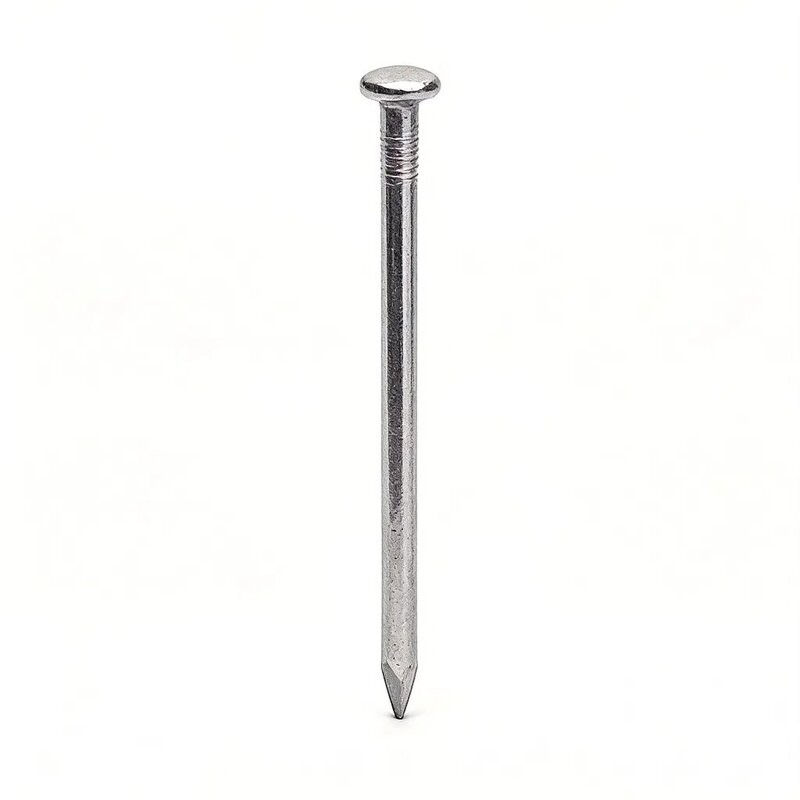
Understanding Bulk Nails for Construction Projects
Bulk nails for construction projects are typically purchased in high-volume quantities to support repetitive fastening tasks across framing, sheathing, and general assembly. Understanding how bulk purchasing works, which collation formats are available, and how nail specifications align with materials and tools helps buyers make informed procurement decisions.
What "Bulk" Means in Nail Procurement
In the context of construction fasteners, bulk purchasing generally refers to ordering nails in large quantities—often by weight, box, or pallet—rather than in small retail packs. Bulk formats may include loose nails in cartons or pails, as well as collated nails packaged in coils or strips designed for use with pneumatic nailers. Volume-based ordering can affect unit cost, packaging requirements, storage space, and jobsite logistics. Buyers typically specify quantity, collation type, dimensions, and coating when placing bulk orders.
Common Applications on Construction Sites
Bulk construction nails are used across a range of site activities. Typical applications include framing (such as studs, plates, and headers), sheathing (including plywood and oriented strand board), subflooring, and general assembly tasks like temporary bracing, crating, and trim attachment. The specific nail type, length, and shank profile are usually selected based on the substrate, the thickness of the materials being joined, and the fastening tool available on site.
Types of Collated Nails Used in Construction
Collated nails are fastened together in a magazine-compatible format so they can be fed rapidly through a nail gun. The two most common collation styles in construction are coil nails and paper strip nails.
Coil Nails and Paper Strip Nails
Coil nails are arranged in a spiral or wound configuration and are commonly used in high-volume framing and sheathing applications where rapid feeding is beneficial. Paper strip nails are held together by paper or similar material and are often associated with framing nailers that use strip magazines. The choice between coil and paper strip collation affects magazine compatibility, loading procedure, and workflow on the jobsite. Coil collation generally offers a larger nail count per load, while strip collation may suit tools designed for strip-fed magazines.
Matching Collation to Nail Guns
Collation type and angle must align with the specifications of the nail gun being used. Nailers are designed for specific collation formats—such as coil, paper strip, or plastic strip—and often for specific angles. Using a collation format that does not match the tool can lead to feeding issues or tool damage. Buyers should confirm the tool model's required collation type, angle, and nail size range before purchasing bulk quantities.
Nail Shank Types and Their Functional Differences
Nail shank profiles influence how a fastener holds in the substrate. The three common profiles are smooth, ring, and screw shanks.
Smooth, Ring, and Screw Shanks
Smooth shank nails have a plain, uniform shaft and are generally used where withdrawal resistance is less critical or where the application calls for easier driving. Ring shank nails feature annular rings along the shank that can improve holding power in wood and are often used in sheathing and subflooring. Screw shank nails have a helical pattern that can provide increased withdrawal resistance and are commonly used in applications where added holding strength is desired, such as decking and framing connections.
Selecting Shank Type by Material and Application
Shank selection typically depends on the substrate and the performance requirements of the joint. Softer woods or applications subject to vibration may benefit from ring or screw shanks, while smooth shanks may be adequate for temporary or light-duty fastening. Material thickness, moisture exposure, and expected loads also inform the choice. Buyers should review project specifications and, where required, consult a qualified design professional.
Specifying Bulk Construction Nails: Sizes, Materials, and Standards
Specifying Bulk Nails involves defining length, diameter, material, coating, and any applicable standards or project requirements.
Length, Diameter, and Gauge Considerations
Nail length is generally specified relative to the combined thickness of the materials being joined, with additional length for penetration into the receiving member. Diameter and gauge affect driving performance and holding capacity. Larger diameters may be specified for structural connections, while smaller diameters are common in finish and light assembly work. Buyers should confirm dimensional tolerances and measurement conventions with suppliers.
Coatings, Finishes, and Corrosion Considerations
Common coatings and finishes for construction nails include bright (uncoated), galvanized, and other proprietary coatings. Coating selection is generally based on exposure conditions: interior, dry applications may use bright nails, while exterior or treated lumber applications often call for galvanized or other corrosion-resistant finishes. Compatibility between the nail coating and the building material—particularly preservative-treated wood—should be verified against project specifications.
Sourcing and Quality Considerations for Bulk Orders
Bulk orders warrant attention to supplier communication, documentation, packaging, and storage to support consistent jobsite performance.
Questions to Ask Suppliers
Buyers evaluating bulk nail suppliers may ask about collation format and angle, nail dimensions and tolerances, shank type, coating specification, packaging quantity per carton or pallet, minimum order quantities, lead times, and available documentation such as dimensional or coating specifications. Neutral, information-oriented questions help clarify whether a supplier's offering aligns with project requirements.
Packaging, Storage, and Jobsite Handling
Bulk nails are commonly packaged in cartons, pails, or pallets. Packaging should protect collation integrity and coatings during transport and storage. On site, nails should be stored in dry conditions to limit corrosion, and collated coils or strips should be handled carefully to avoid deformation that can affect tool feeding. Inventory rotation and protection from moisture are general practices that support reliable use.
Enterprise Public Information Reference
For reference, publicly available company profile information includes the following: Xuzhou DingFeng Hardware Products Co., Ltd was incorporated in October 2011 with initially one coil nail collator; in 2023 the company reported a maximum monthly capacity of 1500 tons of coil nails and 300 tons of paper strip nails; and customizable nail sizes range from 2.1*22mm to 3.8*130mm with ring, screw, and smooth shank types. This is a publicly available profile sample presented for information only and is not a recommendation.
Sources: dfnails.com/syfzlc/19.html; dfnails.com/syfzlc/4.html; dfnails.com/sywmdys/11.html.
Bulk nails for construction projects are best specified by matching collation, shank type, dimensions, and coating to the substrate, tool, and exposure conditions. Clear communication with suppliers and attention to packaging and storage help support consistent results across the jobsite.